
Functional Rhinoplasty in Rajkot
Functional Rhinoplasty for Nasal Airflow and Structural Support
Functional rhinoplasty addresses structural problems that may contribute to nasal blockage, reduced airflow or weakness of the nasal framework. Treatment is planned after examining the septum, nasal valves, passages, cartilage support and external nose.
- Internal and external nasal structure examined together
- Septum, valves and cartilage support assessed
- Functional goals and realistic limitations discussed
Understanding Functional Treatment
What Is Functional Rhinoplasty?
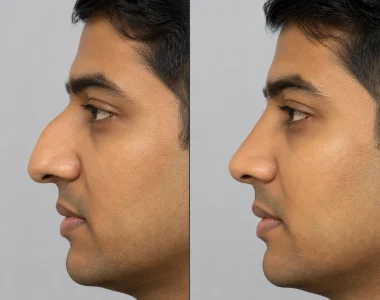
Functional rhinoplasty is performed when the shape or support of the nose contributes to impaired nasal breathing. It may address narrowed nasal valves, weak sidewalls, structural collapse, trauma-related changes or support problems after earlier surgery.
It is different from septoplasty, which primarily corrects the internal septum. Some patients require one procedure, while others may need a combined approach because more than one structure is contributing to obstruction.
Interactive Airflow Anatomy
Explore Where Structural Nasal Obstruction May Occur
Select an anatomical zone to see its general role in breathing and what may be assessed during consultation.
Narrowest airflow region
Nasal Valve
The nasal valve is a narrow part of the nasal airway. Weakness, narrowing or collapse of the sidewall can restrict airflow, particularly during deeper inhalation.
- Sidewall drawing inward while breathing
- Improvement with an external nasal strip
- Restricted airflow during exercise
- Valve width and stability
- Cartilage support
- Response to manual support
Internal dividing wall
Nasal Septum
The septum separates the two nasal passages. Significant deviation may reduce airflow on one side and may also contribute to visible external deviation.
- One side consistently more blocked
- Mouth breathing
- Obstruction after trauma
- Location and degree of deviation
- External nasal alignment
- Need for septoplasty or combined surgery
Internal tissue structures
Turbinates
Turbinates help warm, filter and humidify inhaled air. Enlargement or swelling can contribute to blockage, but this is not the same as a weakness of the nasal framework.
- Alternating nasal congestion
- Symptoms affected by allergy or environment
- Variable blockage rather than fixed narrowing
- Internal examination
- History of allergy-related symptoms
- Whether non-surgical care is relevant
Framework stability
Nasal Sidewall and Cartilage Support
Cartilage supports the sidewalls, tip and middle portion of the nose. Trauma, previous surgery or naturally weak support may allow narrowing or collapse during breathing.
- Visible sidewall collapse
- Breathing worse during exercise
- Obstruction after injury or surgery
- Cartilage strength
- Tip and middle-vault support
- Whether reconstruction may be needed
This model is educational and does not diagnose the cause of nasal obstruction.
Why Nasal Blockage Can Be Complex
One Symptom Can Have Several Possible Causes
A blocked nose does not always mean the septum is deviated. Airflow may be affected by the nasal valves, sidewall support, turbinate swelling, injury-related changes or more than one factor at the same time.
The pattern of symptoms can provide useful clues. Fixed one-sided obstruction differs from blockage that alternates, changes with allergy exposure or appears mainly during exercise. Examination is needed to interpret these patterns correctly.
Functional rhinoplasty should target an identified structural problem—not nasal congestion in general.
Build Your Consultation Summary
Select the Breathing Patterns You Want to Discuss
Choose any relevant patterns. The summary will organise useful consultation topics without attempting to diagnose the cause.
Understanding Treatment Scope
Functional Rhinoplasty, Septoplasty or Combined Treatment?
The recommended approach depends on which structures are causing obstruction and whether external nasal support also requires treatment.
Septoplasty
Primarily corrects an internal deviated septum when it contributes to reduced airflow.
- Internal septal deviation
- Fixed one-sided obstruction
- No primary external reshaping objective
Functional focus
Functional Rhinoplasty
Addresses external or supporting nasal structures that restrict airflow or collapse during breathing.
- Nasal valve narrowing or collapse
- Weak sidewalls or cartilage support
- Trauma or previous surgery-related changes
Combined Surgery
May be considered when septal deviation and external structural problems are both contributing to obstruction.
- Internal and external deviation
- Multiple causes of restricted airflow
- Combined functional planning

Structure Shapes Function
Why Cartilage Support Matters for Breathing
The nose is not simply an open tube. Cartilage maintains the shape of the sidewalls, tip and narrow internal valve region. When support is weak or damaged, the airway may narrow as air is drawn inward.
Functional rhinoplasty may therefore involve strengthening, repositioning or reconstructing support rather than only removing tissue. The exact technique depends on the anatomy and the location of obstruction.
- Which structure is limiting airflow?
- Is the obstruction fixed or dynamic?
- Is septal correction also required?
- How will support be preserved or rebuilt?
Functional Assessment and Planning
What Happens Before Functional Rhinoplasty?
Planning begins by identifying the cause, location and pattern of nasal obstruction.
-
01
Review the Breathing History
Discuss when symptoms occur, whether one side is worse, previous injury or surgery and any allergy-related pattern.
-
02
Examine Internal and External Structures
The septum, valves, passages, sidewalls, tip support and visible nasal alignment may be assessed.
-
03
Clarify the Treatment Scope
The evaluation helps determine whether non-surgical care, septoplasty, functional rhinoplasty or combined treatment may be discussed.
-
04
Review Risks, Recovery and Expected Benefit
The proposed procedure, limitations, possible complications, postoperative care and realistic functional goals are explained.
Functional Rhinoplasty FAQs
Questions About Nasal Function and Breathing
General information about obstruction, septoplasty, nasal valves, suitability and recovery.
Ask a QuestionWhat is functional rhinoplasty?
Functional rhinoplasty changes or supports nasal structures when their shape, weakness or position contributes to impaired airflow. The exact procedure depends on the identified cause of obstruction.
How is functional rhinoplasty different from septoplasty?
Septoplasty primarily straightens the internal septum. Functional rhinoplasty can address external or supporting structures such as narrowed nasal valves, weak sidewalls or cartilage collapse. They may be combined where appropriate.
Can a nasal valve problem affect breathing?
Yes. The nasal valve is a narrow airflow region, and weakness or narrowing can contribute to obstruction. Examination is needed to determine whether the valve is involved.
Does every blocked nose require surgery?
No. Nasal blockage may be caused by structural narrowing, swelling, allergy-related symptoms or other conditions. Treatment should follow an appropriate diagnosis and may not always involve surgery.
Can functional rhinoplasty change appearance?
Because functional treatment may reposition or support nasal structures, some external change can occur. Any expected visible changes should be explained during planning.
How long does recovery take?
Early swelling and bruising generally improve over the first few weeks, but internal healing and nasal refinement continue longer. Recovery varies according to the procedure and individual healing.
Will breathing definitely improve?
No surgical result can be guaranteed. Expected benefit depends on correctly identifying the cause of obstruction, the structures treated and individual healing. Potential benefits and limitations should be discussed before surgery.
Take the Next Step
Understand What May Be Restricting Your Nasal Airflow
Book a consultation with Dr. Manali Kakadia for an individual assessment of nasal blockage, septal deviation, valve function and structural support.