
ENT Specialist
Deviated Septum Treatment
Deviated septum treatment is considered when the wall dividing the nasal passages is displaced enough to contribute to persistent obstruction or uneven airflow. The decision is based on symptoms, examination findings and the effect on daily breathing rather than the presence of septal deviation alone.
- Symptoms and septal anatomy assessed together
- Medical contributors such as rhinitis reviewed before surgery
- Septoplasty considered when structural obstruction is clinically meaningful

Understanding Septal Deviation
Treat a Deviated Septum According to Symptoms and Airflow
A deviated septum means the internal wall between the two nasal passages sits away from the centre. Some people have a noticeable deviation without symptoms, while others experience persistent one-sided blockage, mouth breathing, sleep disturbance or reduced nasal airflow.
If you are experiencing persistent difficulty breathing through the nose, the cause may involve the septum, turbinates, nasal valves, inflammation or more than one factor. Read our guide on difficulty breathing through the nose to understand common structural causes and when an ENT assessment may be useful.
The treatment decision should therefore be based on how much the deviation is affecting breathing and daily comfort, not simply on whether a bend is visible during examination. Review recent evidence on treatment outcomes for symptomatic septal deviation .
A proper assessment also checks whether another problem is adding to the obstruction. Turbinate swelling, rhinitis, nasal valve dysfunction, polyps and sinus inflammation can all make a deviated septum feel worse.
If the cause of obstruction is not yet clear, a broader nasal blockage treatment assessment can help identify whether the septum is the main issue or one part of a mixed problem.
If you are looking for more location-specific information, read our detailed guide on Deviated Septum Treatment in Rajkot , covering common symptoms, evaluation, treatment options and when septoplasty may be considered.
Treatment Information
Deviated Septum Treatment Details
| Condition / Concern | Deviated nasal septum with symptoms such as persistent blockage, uneven airflow or mouth breathing |
|---|---|
| Diagnosis | History, nasal examination and endoscopy when useful |
| Treatment Options | Observation, medical treatment for associated inflammation, or structural correction when appropriate |
| Treatment Goal | Reduce clinically significant obstruction and improve nasal breathing |
Understanding Deviated Septum
What Is a Deviated Septum?
A deviated septum means the internal wall between the two nasal passages sits away from the midline. The deviation may involve cartilage, bone or both and may be present from development or follow nasal trauma.
Mild deviation can exist without any noticeable problem. More pronounced deviation can reduce the available airway on one side and may contribute to persistent congestion, difficulty breathing through the nose, mouth breathing or symptoms that become more noticeable during sleep or exercise.
Mayo Clinic notes that a deviated septum without symptoms does not require treatment, while symptomatic cases may be managed medically for contributing allergy or sinus problems before septoplasty is considered. Review Mayo Clinic guidance on deviated septum treatment .
Different Septal Patterns
Which Type of Deviated Septum May Be Affecting Breathing?
The location of the deviation can change the pattern of blockage and the treatment options that may be considered.
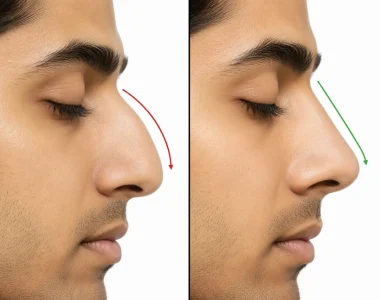
Front Septal Narrowing
Anterior Septal Deviation
Deviation near the front of the nasal passage can significantly affect airflow because this area is close to the nasal valve and nostril entrance.
- Front airway width
- Nasal valve relationship
- One-sided blockage
- Need for structural support

Deeper Septal Narrowing
Posterior Septal Deviation
A bend further back can reduce the posterior airway and may be less obvious without endoscopic examination.
- Posterior airway
- Endoscopic view
- Turbinate relationship
- Deep obstruction

Lower Septal Support
Caudal Septal Deviation
The caudal septum supports the lower nose and columella. Deviation here can affect both breathing and lower nasal alignment.
- Columella position
- Nostril asymmetry
- Tip support
- Airway entrance
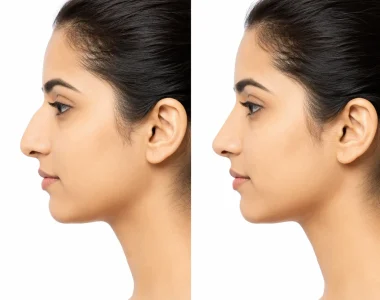
Multi-Level Deviation
S-Shaped Septum
An S-shaped septum bends in more than one direction and can narrow different parts of the airway at different levels.
- Multiple bends
- Cartilage memory
- Airway asymmetry
- Reconstructive planning
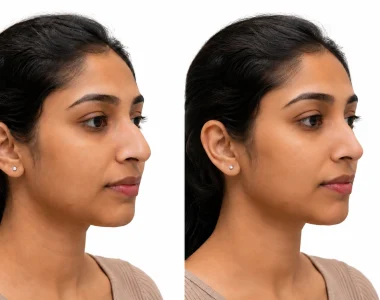
Post-Traumatic Pattern
Trauma-Related Septal Deviation
Previous fracture or nasal injury can displace both the septum and the external nasal framework, sometimes requiring combined functional and structural correction.
- Injury history
- Septal fracture
- External deviation
- Possible septorhinoplasty
Septal Deviation Comparison
How Different Deviated Septum Patterns Can Affect the Airway
Different septal patterns can affect different parts of the nasal airway and may require different correction strategies.
| Deviation Pattern | Where It Occurs | Possible Symptoms | What Is Assessed |
|---|---|---|---|
| Anterior deviation | Front of the septum | Front-of-nose blockage or difficulty during exercise | Nasal entrance, valve region and septal position |
| Posterior deviation | Deeper inside the nose | Deeper one-sided obstruction | Posterior septum, turbinates and airway width |
| Caudal deviation | Lower front septum | Nostril asymmetry, blockage or columellar shift | Lower septum and tip support |
| S-shaped deviation | More than one level | Complex or alternating obstruction | Multiple septal bends and surrounding structures |
| Trauma-related deviation | Septum with possible external change | Blockage after previous injury | Septum, nasal bones and valve support |
When Treatment May Help
When Should a Deviated Septum Be Treated?
Treatment may be considered when a deviated septum is clearly contributing to persistent nasal obstruction, uneven airflow or symptoms that interfere with sleep, exercise or everyday breathing.
Mild deviation may need no treatment
Many people have some septal asymmetry without meaningful symptoms. In those cases, observation is often appropriate and no procedure is required.
Associated inflammation should be treated separately
Allergy, rhinitis and turbinate swelling can increase congestion even when the septum is only moderately deviated. Medical treatment may therefore improve symptoms without changing the septum itself.
- Persistent one-sided nasal blockage
- Uneven nasal breathing that affects sleep or exercise
- Mouth breathing associated with chronic nasal obstruction
- Symptoms that remain despite appropriate medical treatment
- Previous nasal trauma followed by long-term breathing difficulty
When the deviation is confirmed as the main structural cause and symptoms remain significant, septoplasty surgery may be discussed as one treatment option rather than assumed from the outset.
Treatment Expectations
What Deviated Septum Treatment Can and Cannot Improve
The expected result depends on what is actually causing the nasal obstruction. Treating the septum can help when the deviation is a major contributor, but symptoms may continue if another problem is also present.
- Medical treatment can reduce swelling from rhinitis but does not physically straighten the septum.
- Structural correction can improve septal airflow when the deviation is clinically significant.
- Nasal valve dysfunction may need separate treatment even when a septal deviation is present.
- Polyps or chronic sinus inflammation require their own treatment pathway.
A successful treatment plan therefore addresses all meaningful causes of obstruction rather than assuming every symptom comes from the septum.
Potential Treatment Benefits
Potential Benefits of Treating a Symptomatic Deviated Septum
01Easier Nasal Breathing
Appropriate treatment may improve airflow when septal narrowing is contributing to obstruction.
02Less One-Sided Blockage
Patients with persistent blockage on the deviated side may experience more balanced breathing after effective treatment.
03Reduced Mouth Breathing
Improved nasal airflow can reduce reliance on mouth breathing in selected patients.
04Better Sleep Comfort
Reducing chronic nasal obstruction may make nighttime breathing more comfortable.
05Clearer Long-Term Management
Identifying the role of the septum helps separate structural symptoms from allergy, sinus or valve-related problems.
Treatment Limitations
Why Deviated Septum Symptoms May Not Fully Resolve
Nasal obstruction is often multifactorial. Even when the septum is deviated, another nasal condition may also influence breathing.
Rhinitis or Allergy
Inflammatory swelling can continue to cause congestion even when the septum is not the only problem.
Turbinate Enlargement
Enlarged turbinates can reduce airflow independently of septal position.
Nasal Valve Dysfunction
A weak or narrow nasal valve can remain obstructive unless it is recognised and treated separately.
Polyps or Sinus Disease
Polyps and chronic sinus inflammation can produce persistent blockage or smell loss.
Residual Structural Narrowing
Complex septal anatomy or more than one obstructive site can mean symptoms are not explained by the septum alone.
Diagnosis and Treatment Pathway
How a Deviated Septum Is Evaluated and Treated
The aim is to confirm whether the septum is responsible for the symptoms before choosing treatment.
-
01
Review the Symptom Pattern
Discuss which side feels blocked, how long symptoms have lasted, whether they vary and what treatments have already been tried.
-
02
Examine the Nasal Passages
Assess the septum, turbinates, nasal lining and visible airway narrowing.
-
03
Use Endoscopy When Helpful
Endoscopy may be used to inspect deeper areas of the nasal cavity and identify additional causes of obstruction.
-
04
Treat Reversible Contributors
Rhinitis, allergy or inflammatory swelling may be managed medically before structural treatment is considered.
-
05
Decide Whether the Septum Needs Correction
If symptoms remain significant and the deviation is confirmed as the main structural cause, surgical correction may be discussed.
-
06
Review the Response to Treatment
Follow-up evaluates nasal airflow, symptom improvement and whether any additional nasal condition still needs treatment.
Before Your Assessment
How to Prepare for a Deviated Septum Evaluation
A useful assessment starts with a clear history of the breathing problem. Patients do not need to know the exact cause in advance.
Information That Can Help
- Which side feels blocked: note whether the problem is fixed, alternating or worse in certain positions.
- Duration: mention whether symptoms have been present since childhood, after an injury or only recently.
- Previous treatment: share which nasal sprays, antihistamines or other medicines have been tried.
- Allergy and sinus symptoms: sneezing, itching, discharge, facial pressure or reduced smell can indicate another contributor.
- Previous nasal trauma: fractures and earlier surgery can alter septal anatomy.
- Sleep and exercise impact: mouth breathing, snoring or difficulty during exertion help show how much the obstruction affects daily life.
If recurrent sinus symptoms accompany the septal problem, sinusitis treatment may also need to be assessed because sinus inflammation can contribute to persistent blockage.
When Treatment May Not Be Needed
When a Deviated Septum May Not Need Structural Treatment
A deviated septum may not need structural treatment when it causes little or no functional difficulty, or when another condition better explains the symptoms.
- The deviation is mild and breathing is comfortable
- Rhinitis or allergy is the main cause of congestion
- Turbinate swelling is more significant than septal narrowing
- Nasal valve dysfunction is the dominant source of obstruction
- Polyps or chronic sinus disease are responsible for the blocked sensation
- Symptoms are temporary and related to an acute infection
Where endoscopy shows polyps contributing to obstruction or reduced smell, nasal polyp treatment may be more relevant than septal correction alone.
Treatment Safety
Key Principles for Safe Deviated Septum Treatment
Safe care starts with confirming the cause of obstruction and choosing the least invasive effective treatment.
Confirm the Septum Is Symptomatic
A visible deviation should correspond with the patient’s breathing problem before structural treatment is considered.
Treat Inflammation Appropriately
Rhinitis and turbinate swelling should be recognised because they can mimic or amplify septal obstruction.
Assess the Whole Nasal Airway
The nasal valve, turbinates, polyps and sinus drainage areas should not be overlooked.
Escalate Only When Needed
Surgical correction is reserved for clinically meaningful structural obstruction rather than used for every septal deviation.
Treatment Planning
What Can Affect the Cost of Deviated Septum Treatment?
The cost depends on what the evaluation shows. Some patients need only consultation and medical treatment for associated inflammation, while others may require endoscopy or structural correction.
Factors That Can Affect Treatment Cost
- Type of assessment: consultation, endoscopy and additional investigations vary according to clinical need.
- Associated nasal conditions: rhinitis, turbinate enlargement, valve dysfunction or sinus disease can change the treatment plan.
- Medical treatment: medicines and follow-up may be sufficient when inflammation contributes to symptoms.
- Structural correction: surgery is considered only when the septum is confirmed as a meaningful obstructive cause.
- Combined treatment: more than one nasal problem may need management in selected patients.
A meaningful estimate should therefore follow diagnosis rather than be based only on the presence of a deviated septum.
General information about symptoms, diagnosis, non-surgical management and when structural correction may be considered.
Frequently Asked Questions About Deviated Septum Treatment
General information about cosmetic nose reshaping, suitability, safety, recovery and treatment planning.
Ask a QuestionDoes every deviated septum need treatment?
No. Many people have some septal deviation without meaningful symptoms. Treatment is considered when the deviation contributes to persistent obstruction or other functional problems.
Can a deviated septum be treated without surgery?
Associated swelling from allergy or rhinitis can often be treated medically and may reduce symptoms. Medication does not physically straighten the septum, but surgery is not necessary unless structural obstruction remains clinically significant.
How is a deviated septum diagnosed?
Diagnosis is based on symptoms and examination of the nasal passages. Endoscopy may be used when a deeper view is needed, while imaging is reserved for selected cases.
What symptoms can a deviated septum cause?
Possible symptoms include persistent one-sided blockage, uneven nasal airflow, mouth breathing, difficulty during sleep or exercise and a sense that one nasal passage is consistently narrower.
When is septoplasty considered?
Septoplasty is considered when the septum is confirmed as a meaningful cause of obstruction and symptoms remain significant despite appropriate management of other contributing conditions.
Can nasal blockage continue even if the septum is treated?
Yes. Rhinitis, turbinate enlargement, nasal valve dysfunction, polyps or sinus disease can also contribute to obstruction and may require separate treatment.
Take the Next Step
Find Out Whether a Deviated Septum Is Causing Your Breathing Problem
Discuss persistent one-sided blockage, mouth breathing, sleep symptoms, previous injury and earlier treatment with Dr. Manali Kakadia and understand which treatment, if any, is appropriate.