
ENT Surgeon
Septoplasty Surgery
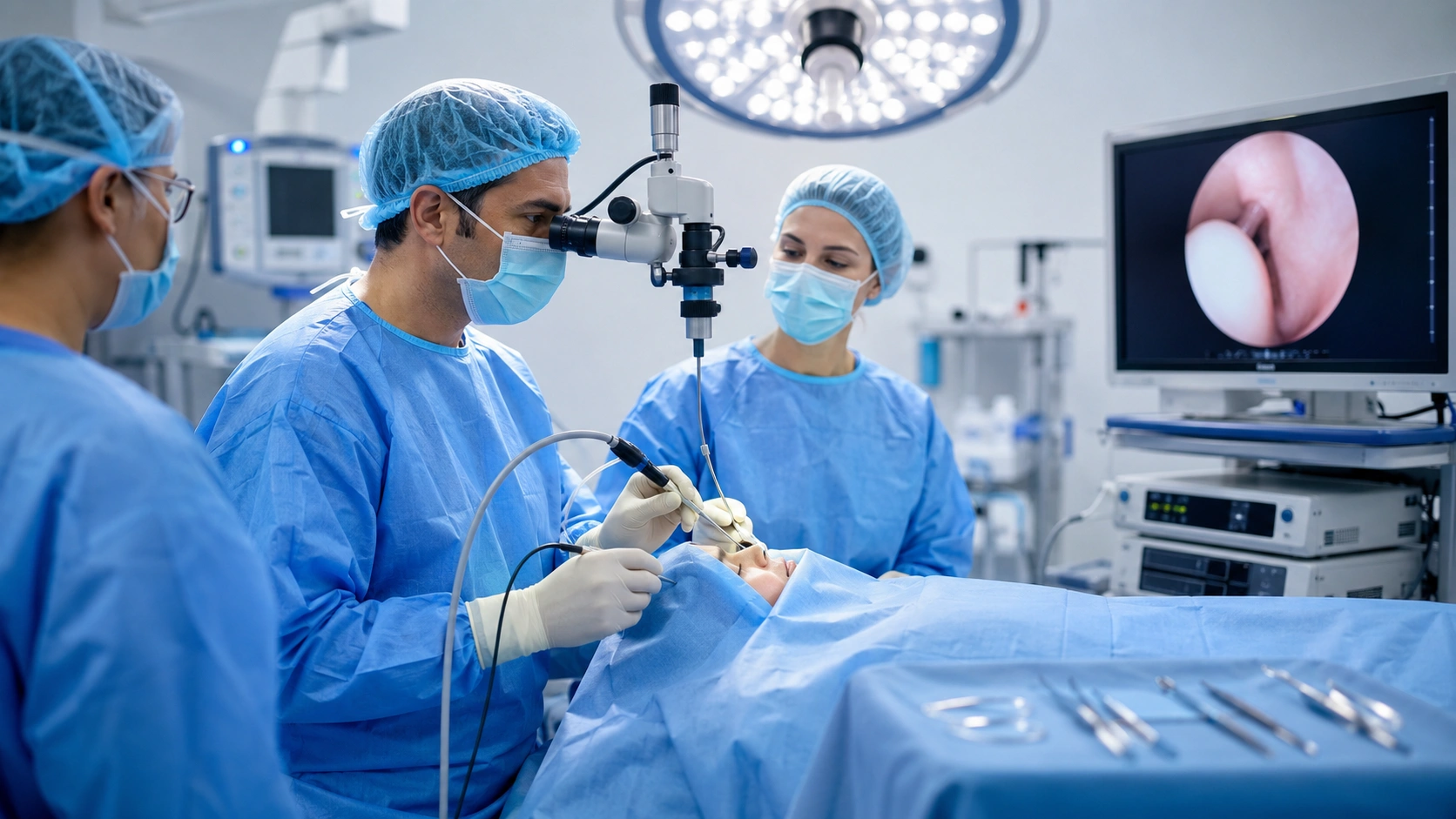
Septoplasty surgery straightens or repositions a deviated nasal septum when structural narrowing is a major cause of persistent nasal obstruction. The operation is designed to improve the internal airway while preserving enough septal support for long-term nasal stability.
- Septal obstruction confirmed before surgery is planned
- Internal airway correction with preservation of nasal support
- Recovery, limitations and expected breathing improvement discussed beforehand
Functional Nasal Airway Surgery
When Septoplasty Is Used to Correct Structural Nasal Obstruction
Septoplasty is a functional nasal operation performed when a deviated septum reduces airflow enough to cause clinically meaningful obstruction. The surgeon corrects the obstructing cartilage, bone or both while preserving a stable framework that supports the bridge and tip.
Randomised clinical evidence has shown that appropriately selected adults with symptomatic septal deviation can achieve greater improvement in nasal obstruction and quality-of-life scores after septoplasty than with defined medical management alone. Review the NAIROS randomised septoplasty trial .
Before surgery is considered, the septum should be confirmed as a meaningful source of the breathing problem. Patients who are still at the diagnostic stage can first review deviated septum treatment to understand when structural correction may or may not be necessary.
Septoplasty does not automatically correct allergy, turbinate swelling, nasal valve collapse or sinus disease, so these conditions are assessed separately when they contribute to obstruction.
Treatment Information
Septoplasty Surgery Treatment Details
| Procedure | Septoplasty surgery for symptomatic septal deviation |
|---|---|
| Main Goal | Improve internal nasal airflow by correcting obstructing septal cartilage or bone |
| Anaesthesia / Setting | Commonly performed under general anaesthesia as day-care or short-stay surgery |
| Recovery | Early recovery usually takes about 1–2 weeks; internal healing continues for longer |
Understanding Septoplasty
What Is Septoplasty Surgery?
Septoplasty is surgery performed inside the nose to straighten a deviated septum. The surgeon may trim, reshape, reposition or selectively remove obstructing portions of cartilage and bone, then return the septal lining to its normal position.
The purpose is functional: to create a more open nasal airway while retaining sufficient septal support. Isolated septoplasty usually does not aim to change the external appearance of the nose.
For more detailed information about indications, procedure, recovery and treatment considerations, read our guide on septoplasty in Rajkot .
Cleveland Clinic describes septoplasty as an outpatient operation that commonly takes about 30 to 90 minutes, with initial recovery often taking one to two weeks while deeper healing continues for several months. Read Cleveland Clinic’s current septoplasty guide .
Explore Surgical Scenarios
Septoplasty Surgery: Which Structural Problem Is Being Corrected?
The surgical plan depends on where the septum is bent, how much airway it narrows and whether another nasal structure also needs treatment.
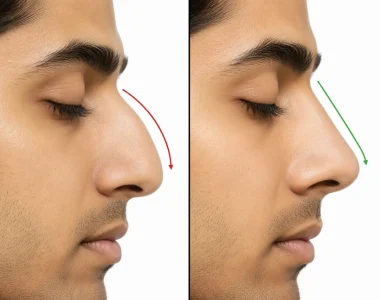
Front Airway Narrowing
Anterior Septoplasty
Deviation near the front of the nasal passage can have a disproportionate effect on breathing because it sits close to the nasal valve.
- Anterior septal cartilage
- Valve relationship
- Nostril entrance
- Support preservation

Deeper Nasal Narrowing
Posterior Septoplasty
A posterior spur or bend can narrow the deeper nasal passage and may be better visualised with endoscopic assistance.
- Posterior cartilage or bone
- Septal spur
- Turbinate relationship
- Endoscopic access

Lower Septal Support
Caudal Septal Correction
Caudal deviation can narrow the front airway and shift the columella, so correction must balance straightening with support of the tip and nasal base.
- Caudal septum
- Columella position
- Tip support
- Anterior airflow
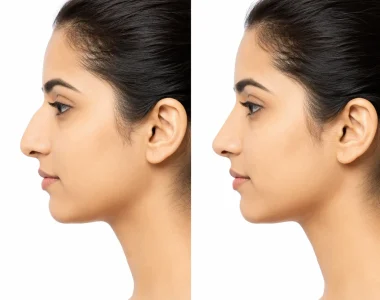
Multi-Level Septal Deformity
Complex Septal Reconstruction
S-shaped, severe or previously operated septums may require more extensive mobilisation and reconstruction than a limited septoplasty.
- Multiple bends
- Cartilage memory
- Previous surgery
- Graft or support needs
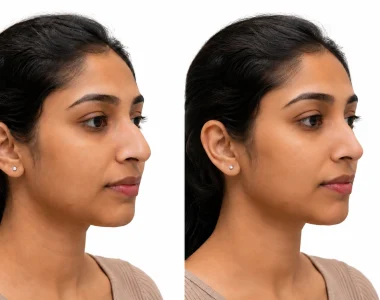
More Than One Obstructive Site
Septoplasty with Additional Airway Treatment
Some patients have septal deviation together with enlarged turbinates or other airway problems, so more than one structure may need treatment.
- Septum
- Turbinates
- Valve assessment
- Combined treatment planning
Septoplasty Planning
Septoplasty Approach Comparison
Different septal problems can require different levels of surgical correction and support.
| Septal Problem | Main Surgical Focus | Why It Matters | Planning Consideration |
|---|---|---|---|
| Anterior deviation | Front septal correction | Can strongly affect the narrow nasal entrance | Protect valve area and front support |
| Posterior spur or bend | Deeper septal correction | Can reduce posterior airflow | Endoscopic visualisation may help |
| Caudal deviation | Lower septal repositioning | Can affect breathing and columellar alignment | Preserve tip and base support |
| Complex / S-shaped deviation | Broader reconstruction | Multiple bends can create multi-level obstruction | May require grafting or advanced reconstruction |
| Septum + turbinate obstruction | Combined airway treatment | More than one structure limits airflow | Treat only confirmed contributors |
Septoplasty Suitability
Who May Be Suitable for Septoplasty Surgery?
Septoplasty may be considered when persistent nasal obstruction is linked to a deviated septum and symptoms remain significant after reversible inflammatory contributors have been appropriately treated.
Symptom severity is important
Randomised trial data suggest that patients with greater baseline obstruction can experience larger improvements after septoplasty, which supports selecting surgery according to symptom burden rather than anatomy alone.
The septum should match the breathing problem
Examination should show that the location of septal narrowing corresponds with the patient’s obstruction. Turbinate enlargement and nasal valve dysfunction should also be assessed so surgery targets the correct site.
- Persistent one-sided nasal obstruction
- Difficulty breathing through the nose during sleep or exercise
- Symptoms that remain despite appropriate medical management
- Clinically significant septal narrowing confirmed on examination
- Trauma-related septal deformity affecting nasal airflow
Patients whose main complaint is broader congestion without a confirmed structural cause may first benefit from a nasal blockage treatment assessment before septoplasty is considered.
Septoplasty Expectations
What Septoplasty Can and Cannot Change
Septoplasty changes the internal septal framework. Its main purpose is to improve functional airflow rather than alter the visible shape of the nose.
- Septoplasty can improve breathing when septal deviation is a major obstructive factor.
- It does not treat allergy or chronic rhinitis by itself.
- It does not automatically correct nasal valve collapse or sinus disease.
- Isolated septoplasty is not intended as cosmetic reshaping.
- Improvement can be gradual while internal swelling settles.
Mayo Clinic similarly notes that surgery is used to correct a symptomatic deviated septum and that patients should discuss realistic expected results before proceeding. Review Mayo Clinic’s septoplasty overview .
Potential Benefits
Potential Benefits of Septoplasty Surgery
01Improved Nasal Airflow
Correcting the obstructing septal framework can create more usable breathing space.
02Reduced One-Sided Obstruction
Patients whose symptoms match the deviated side may experience more balanced nasal breathing.
03Better Breathing During Sleep
Reduced structural obstruction may make nighttime nasal breathing more comfortable.
04Improved Exercise Comfort
Patients limited by nasal airflow during exertion may notice easier breathing after successful correction.
05Improved Nasal Quality of Life
Clinical trials show meaningful improvement in patient-reported obstruction and sinonasal quality-of-life scores in appropriately selected patients.
Safety & Recovery
Possible Side Effects and Risks of Septoplasty Surgery
Septoplasty is commonly performed, but every operation carries potential complications that should be discussed during informed consent.
Bleeding
Minor bleeding can occur during early recovery, while persistent or heavy bleeding requires medical review.
Infection
Infection is uncommon but possible and may require treatment.
Persistent Nasal Obstruction
Symptoms can remain if another obstructive site is present or if residual deviation persists.
Septal Perforation
A hole can rarely form in the septum and may cause crusting, bleeding or whistling.
Change in Support or Need for Revision
Altered support, scarring or persistent deviation can occasionally affect the result and lead to further treatment.
The Surgical Journey
Septoplasty Surgery: Step-by-Step Procedure
The exact technique varies according to the location and complexity of the deviation, but the aim is to improve airflow while maintaining structural support.
-
01
Confirm the Surgical Plan
Review symptoms, examination findings, previous treatment and any additional obstructive sites before surgery.
-
02
Administer Anaesthesia
Septoplasty is commonly performed under general anaesthesia, with the exact plan determined by the surgical and anaesthesia teams.
-
03
Access the Septum Internally
Incisions are usually made inside the nostrils so the septal lining can be elevated without a visible external incision.
-
04
Correct the Deviated Cartilage and Bone
Obstructing portions may be trimmed, reshaped, repositioned or selectively removed while maintaining an adequate support framework.
-
05
Reposition the Septal Lining
The lining is returned to position and may be stabilised with sutures, splints or other support according to the technique used.
-
06
Monitor Recovery and Airflow
Follow-up checks swelling, bleeding, crusting, septal position and gradual improvement in breathing.
Before Surgery
How to Prepare for Septoplasty Surgery
Preoperative planning confirms that the septum is a major cause of obstruction and reviews other nasal conditions that could affect the result.
Common Pre-Surgical Preparation
- Medical history: previous surgery, bleeding problems, chronic illness and anaesthetic history are reviewed.
- Medication review: aspirin, ibuprofen and other medicines or supplements that may affect bleeding should be discussed.
- Nasal examination: septum, turbinates, mucosa and valve area are assessed.
- Endoscopy: may be used when deeper anatomy or another obstructive site needs evaluation.
- Imaging: CT is selected when sinus disease or complex anatomy makes it clinically useful rather than routinely for every septoplasty.
- Smoking cessation: nicotine can impair healing and should be stopped according to medical advice.
If the patient also has recurrent facial pressure, thick discharge, reduced smell or chronic sinus symptoms, sinusitis treatment may need to be assessed before deciding whether septoplasty alone is sufficient.
When Surgery May Be Delayed
When Septoplasty May Not Be the Right First Step
Septoplasty should not be chosen simply because a deviation is visible. Surgery may be delayed when the septum is not clearly responsible for the symptoms or when another condition needs treatment first.
- The septal deviation causes little or no functional difficulty
- Rhinitis or allergy is the dominant cause of congestion
- Active nasal or sinus infection is present
- Nasal valve dysfunction is the primary obstructive site
- Medical conditions increase anaesthetic or bleeding risk
- Symptoms are mainly caused by polyps or chronic sinus disease
If endoscopy shows polyps contributing to blockage or smell loss, nasal polyp treatment may be needed instead of, or alongside, septal surgery.
Septoplasty Safety
Key Safety Principles in Septoplasty Surgery
Safe septoplasty aims to improve airflow while protecting the septal lining, nasal support and any structures that do not need correction.
Preserve Septal Support
Enough stable cartilage and bone should remain to support the nasal bridge and tip.
Protect the Septal Lining
Careful handling of the mucosa helps reduce the risk of perforation, scarring and postoperative crusting.
Treat the Correct Airway Site
Septoplasty should target confirmed septal obstruction rather than be used as a substitute for valve, turbinate or sinus treatment.
Plan Combined Procedures Selectively
Additional nasal procedures should be added only when examination shows another clinically meaningful contributor to obstruction.
Treatment Planning
What Can Affect the Cost of Septoplasty Surgery?
Septoplasty cost varies according to the complexity of the deviation, the operative setting, anaesthesia and whether additional airway treatment is required.
Common Cost Factors
- Septal complexity: limited bends and complex multi-level deviations require different operative work.
- Additional turbinate treatment: may be considered when clinically significant turbinate enlargement also restricts airflow.
- Hospital and anaesthesia: theatre, facility and anaesthetic requirements influence the total fee.
- Preoperative evaluation: investigations are selected according to health history and surgical requirements.
- Postoperative care: medicines, splints and follow-up requirements vary by case.
A personalised estimate is most useful after examination confirms the surgical scope. Cost should not be based only on the diagnosis of a deviated septum.
Septoplasty Surgery Questions
Frequently Asked Questions About Septoplasty Surgery
General information about cosmetic nose reshaping, suitability, safety, recovery and treatment planning.
Ask a QuestionWhat does septoplasty surgery correct?
Septoplasty straightens or repositions obstructing parts of the nasal septum to improve the internal airway. It is used when septal deviation is clinically linked to nasal obstruction.
Is septoplasty always done under general anaesthesia?
General anaesthesia is commonly used, but the anaesthetic plan depends on the procedure, patient factors and surgical setting.
How long does septoplasty surgery take?
Many isolated septoplasty procedures take roughly 30 to 90 minutes, although more complex or combined operations can take longer.
How long is recovery after septoplasty?
Initial recovery is commonly around one to two weeks, while internal swelling and deeper cartilage and bone healing continue for longer.
Will septoplasty change the outside shape of my nose?
Isolated septoplasty is intended to correct the internal septum and usually does not aim to change external nasal shape. A separate or combined rhinoplasty-type procedure is needed when external correction is required.
Can nasal blockage remain after septoplasty?
Yes. Persistent symptoms can occur when turbinate enlargement, nasal valve dysfunction, rhinitis, polyps, sinus disease or residual septal deviation also contribute to obstruction.
Take the Next Step
Understand Whether Septoplasty Is Appropriate for Your Nasal Obstruction
Discuss persistent nasal obstruction, confirmed septal deviation, previous medical treatment and any additional airway findings with Dr. Manali Kakadia before deciding on surgery.