
Wide Nose Correction in Rajkot
Wide Nose Correction for Better Definition, Proportion and Facial Balance
A wide-looking nose may involve the bridge, middle vault, nasal tip, nostril base or more than one area. Treatment planning identifies where the width originates and considers skin thickness, cartilage, facial width, breathing and structural support before recommending correction.
- Upper, middle and lower nose assessed separately
- Facial width and individual proportions considered
- Support and breathing protected during planning
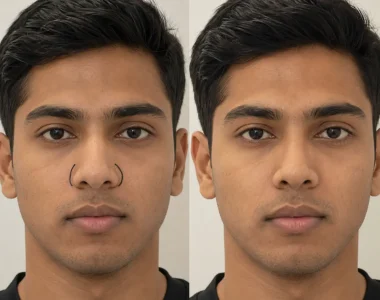
Understanding Nasal Width
What Is Wide Nose Correction?
Wide nose correction is a general term for rhinoplasty techniques intended to improve nasal proportion where the bridge, middle nose, tip or nostril base appears broad. The correct approach depends on which structure creates the appearance of width.
A nose should not be judged against one fixed width. Facial width, eye spacing, skin thickness, cartilage strength, nostril shape and breathing all affect the treatment plan.
Interactive Width Concern Guide
Which Part of the Nose Appears Wide?
Select the closest concern to understand what may be reviewed during consultation.
Upper nasal width
Broad Nasal Bridge
A broad upper bridge may relate to nasal-bone position, bridge height or the relationship between the nose and eye spacing.
Central nasal width
Wide Middle Vault
The middle section may appear broad because of cartilage shape, bridge structure or sidewall position.
Lower nasal definition
Broad Nasal Tip
A broad tip may relate to cartilage width, cartilage separation, skin thickness or weak definition.
Nostril-base width
Wide Nostril or Alar Base
The nostril base may appear broad because of alar position, nostril shape or the relationship with the tip.
Multi-area width
Combined Wide Nose
Some noses appear broad at the bridge, middle vault, tip and nostril base together. Each area must be planned separately.
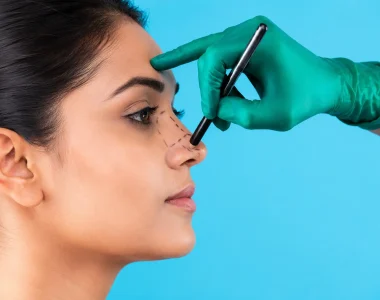
Natural Width Is Individual
Why Wide Nose Correction Should Respect Facial Identity
Nasal width varies naturally between individuals. A nose that appears broad in one face may be well balanced in another because facial width, eye spacing, cheek structure and skin thickness are different.
Correction should therefore focus on proportion rather than making every nose narrow. The most credible result usually preserves individual character while improving definition and balance.
A trustworthy treatment plan explains what can be refined without promising an artificial or standardised nose shape.
Interactive Front-View Balance Tool
Understand Which Width Has the Strongest Visual Effect
Move the three sliders. The explanation updates immediately and remains easy to follow.
Bridge, tip and nostril-base width currently receive similar attention.
Possible Treatment Components
What May Be Included in Wide Nose Correction?
Not every patient needs every component. The plan depends on where the width originates.
Bridge Narrowing
The bony upper bridge may be repositioned where it is the main source of width.
Middle-Vault Reshaping
Central cartilage may be reshaped while protecting sidewall support and airflow.
Tip Refinement
Broad tip cartilage may be reshaped or supported to improve definition and proportion.
Alar-Base Correction
Nostril-base width may be adjusted where appropriate and proportionate to the face.
Understanding Early Swelling
Why the Nose May Still Look Broad During Early Recovery
Swelling can temporarily make the bridge, tip or nostril area appear wider after surgery. The tip in particular may retain swelling longer than the upper bridge.
Early photographs should not be used to judge the final width. Refinement develops gradually as swelling reduces and the tissues settle around the new structure.
- Early swelling may exaggerate width
- The tip can settle more slowly
- Healing differs between patients
- Final refinement requires patience
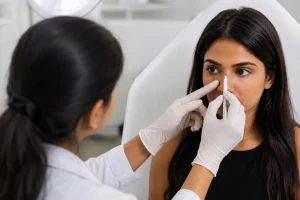
Wide Nose Correction Cost Estimator
Build an Indicative Treatment Budget
Select the likely treatment scope and complexity. The amount shown is a broad planning guide rather than a clinic quotation.
Consultation and Planning
How Wide Nose Correction Is Planned
- 01
Identify the Width Concern
Discuss whether the bridge, middle nose, tip, nostril base or several areas appear broad.
- 02
Assess Structure and Proportion
Examine bone, cartilage, skin thickness, support, facial width and breathing.
- 03
Choose the Correction Scope
Decide whether focused, combined, functional or structural rhinoplasty may be appropriate.
- 04
Review Recovery, Limits and Cost
Discuss realistic narrowing, healing, possible risks and a personalised quotation.
Wide Nose Correction FAQs
Questions Before Treatment
General information about suitability, breathing, recovery and cost.
Ask a QuestionCan a wide nose be made narrower?
Rhinoplasty may improve nasal width where appropriate. The technique depends on whether width comes from bone, cartilage, the tip, nostril base or several regions.
Can only the nostril width be corrected?
In selected patients, treatment may focus on the alar base. The tip and complete nasal proportions still need assessment.
Can wide nose correction affect breathing?
Over-narrowing can affect support or airflow. Functional assessment and structural preservation are therefore important.
Will the nose look very narrow after surgery?
The aim should be proportionate refinement rather than extreme narrowing. The result depends on anatomy, skin and facial balance.
How much does wide nose correction cost in Rajkot?
A broad planning range may begin around ₹65,000 and extend beyond ₹1,50,000 for combined, functional or structurally complex correction. The clinic’s fee requires examination.
How long does swelling last?
Early swelling improves gradually, but the tip and lower nose can take months to refine fully.
Can bridge, tip and nostril width be corrected together?
They may be addressed together where suitable, but each region requires separate structural planning.
Take the Next Step
Find Out Which Part of the Nose Is Creating the Appearance of Width
Book a consultation with Dr. Manali Kakadia to discuss nasal proportions, treatment options, breathing, recovery and a personalised cost estimate.