
Congenital Nose Correction in Rajkot
Congenital Nose Deformity Correction for Balanced Shape and Healthy Breathing
Some nasal concerns are present from birth rather than caused by injury or ageing. Congenital nose deformity correction looks at how the nose formed, how it affects breathing, and how it may be refined once growth and timing are appropriate.
- Shape, structure and breathing assessed together
- Guidance on the right age to consider treatment
- Planning explained in plain, simple language
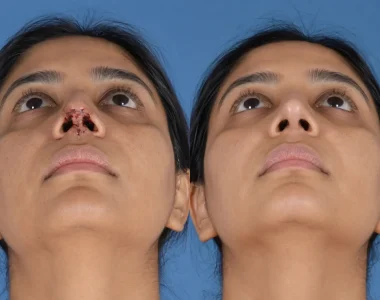
Understanding Congenital Nasal Concerns
What Is Congenital Nose Deformity Correction?
A congenital nose deformity is a nasal shape or structural difference that has been present since birth, rather than one that developed later from injury or previous surgery. It may affect the external appearance, the internal breathing passage, or both.
These concerns vary widely between patients. A nose that appears asymmetric, off-centre, unusually shaped, or associated with a breathing difficulty may all fall under this category, and each requires its own assessment rather than a single standard approach.
Interactive Concern Guide
Which Description Feels Closest to You?
Select the option that feels most familiar to understand what may be discussed during a consultation.
Visible asymmetry
Off-Centre or Asymmetric Nose
A nose that has always looked slightly bent, tilted or uneven may relate to how the nasal bones and cartilage developed, rather than an injury.
Cleft-related structure
Nasal Concern Linked to Cleft Lip or Palate
When nasal shape is connected to a cleft condition, the nose, lip and palate are often related, so treatment usually needs coordinated planning rather than nasal correction alone.
Breathing since birth
Restricted Breathing From Early Life
Breathing difficulty that has existed for as long as someone can remember may point to a septum or internal passage that did not form in a fully symmetric way.
Nostril difference
Uneven Nostril Shape or Size
One nostril appearing narrower, wider or a different shape from the other since birth may relate to cartilage support or surrounding soft tissue.
Not yet defined
You Are Not Sure What It Is Called
Many patients simply know something has felt different for as long as they remember, without a clear name for it. That is a completely normal starting point for a first consultation.
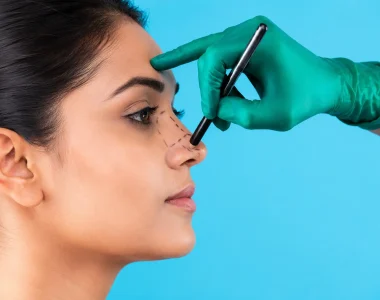
A Nose That Has Always Been This Way
Why a Congenital Nose Deserves Its Own Kind of Assessment
A nose you were born with has usually shaped the way you see your own face for your entire life. That is different from a nose changed suddenly by injury, and it deserves a slower, more individual conversation rather than a quick fix.
The first step is simply understanding what is actually happening structurally, in language that makes sense, before any decision about treatment is discussed at all.
A trustworthy first consultation explains the anatomy clearly and never assumes surgery is the only path forward.
Interactive Timing Guide
When Is Correction Usually Considered?
Timing depends on age, growth and the specific concern. Select a life stage for a general, easy-to-follow overview.
Early years
Observation Is Usually the First Step
In childhood, the nose is still growing. Most cosmetic correction is postponed during this stage, and the focus is on monitoring the concern and protecting normal development.
- Growth is monitored rather than corrected
- Any breathing concern is assessed separately
- Cosmetic surgery is generally not the priority yet
Growing years
Growth Still Needs to Be Respected
During the teenage years, facial growth is often still completing. Elective cosmetic correction is usually planned only once growth has largely settled.
- Timing is judged against facial growth, not age alone
- Emotional readiness is discussed alongside anatomy
- Functional issues may still be treated earlier if needed
Adult years
Elective Correction Is Usually Discussed Here
Once facial growth is complete, cosmetic and structural correction can usually be planned with a clearer, more stable picture of the final nasal shape.
- Growth is complete, so planning is more predictable
- Cosmetic and functional goals can be combined
- Recovery and expectations are discussed in detail
At any age
Breathing Difficulty Can Be Assessed Earlier
When a congenital concern is genuinely affecting breathing rather than appearance alone, it may be evaluated earlier than cosmetic correction, regardless of the exact age.
- Functional impact is assessed on its own timeline
- Severity, not age alone, guides urgency
- Cosmetic refinement can often follow later if desired
This is general guidance only. The right timing for you or your child depends on an individual clinical assessment.
Interactive Self-Check
Do Any of These Sound Familiar?
Tap anything that feels true for you. This is a simple starting point to organise your thoughts, not a diagnosis.
Your Self-Check
This self-check is for general awareness only and does not replace a proper clinical assessment.
Possible Treatment Components
What May Be Included in Correction?
Not every patient needs every component. The plan depends on the specific congenital concern and its severity.
Structural Realignment
Bone and cartilage may be repositioned where asymmetry is the main concern.
Septal Correction
An internal septum that did not form symmetrically may be corrected to improve airflow.
Tip and Nostril Refinement
Uneven tip shape or nostril asymmetry may be refined for better balance.
Combined Reconstruction
More complex cases, including cleft-related concerns, may need staged or reconstructive planning.
Common Misunderstandings
Myths vs Facts About Congenital Nose Correction
Tap a card to reveal the fact.
For Parents and Patients
You Do Not Need All the Answers Before Your First Visit
Many families come in only knowing that something has looked or felt different since childhood, without medical terms for it. That is enough to start a conversation.
A first consultation is about listening and examining, not about committing to surgery. Questions are welcomed at every stage, and there is no obligation to decide anything on the first visit.
- A calm, unhurried explanation of the anatomy
- Honest guidance on whether treatment may help
- Clarity on timing, especially for children and teenagers
- No pressure to make a decision immediately

Something Worth Knowing
You Are Not the Only One Who Feels This Way
It is common to grow up quietly wondering whether a nose that has "always looked like this" counts as something worth mentioning to a doctor. Many patients say the same thing when they finally come in: they were not sure if the concern was serious enough, or whether it even had a proper name.
It does not need to be dramatic to be worth discussing. If it has quietly affected how you feel about your face, or if breathing has never felt quite right on one side, that alone is reason enough to ask a few honest questions in a calm setting.
Consultation and Planning
How Congenital Nose Correction Is Planned
- 01
Understand the History
Discuss how the concern has looked and felt since birth, and any related conditions.
- 02
Assess Structure and Function
Examine bone, cartilage, septum, breathing and facial symmetry together.
- 03
Confirm the Right Timing
Decide whether observation, functional treatment or cosmetic correction is appropriate now.
- 04
Plan the Approach Together
Discuss realistic outcomes, recovery, possible risks and a personalised plan.
Congenital Nose Correction FAQs
Questions Before Treatment
General information about suitability, timing, breathing and recovery.
Ask a QuestionWhat counts as a congenital nose deformity?
Any nasal shape or structural difference present since birth, including asymmetry, breathing concerns or shapes linked to conditions such as cleft lip or palate.
Can this be corrected in childhood?
Cosmetic correction is usually postponed until growth is more complete. Significant breathing difficulty may be assessed earlier on its own timeline.
Is this the same as regular rhinoplasty?
The techniques can overlap, but planning for a congenital concern also considers how the structure developed and, where relevant, related conditions.
Will treatment affect breathing?
Breathing is assessed as part of every congenital nose evaluation, since structure and airflow are often closely connected from birth.
Do I need a diagnosis before booking a consultation?
No. Many patients simply know something has always looked or felt different, and the first visit is where that gets properly assessed.
Is more than one procedure ever needed?
In some cases, particularly cleft-related or complex concerns, treatment may be staged over more than one procedure.
Take the Next Step
Understand What Your Congenital Nasal Concern Actually Involves
Book a consultation with Dr. Manali Kakadia to discuss nasal shape, breathing, timing and a personalised plan, explained in plain language from the very first visit.