
Microscopic Laryngeal Surgery in Rajkot
Microscopic Laryngeal Surgery for Precise, Voice-Preserving Treatment
Vocal cord nodules, polyps and cysts can affect how your voice sounds and how much effort it takes to use it. Microscopic surgery allows these to be treated with a level of precision the naked eye simply can't match.
- Vocal cords examined directly before any surgical decision
- Microscopic technique protects surrounding healthy tissue
- Structured voice care built into recovery, not an afterthought

Understanding the Procedure
What Is Microscopic Laryngeal Surgery?
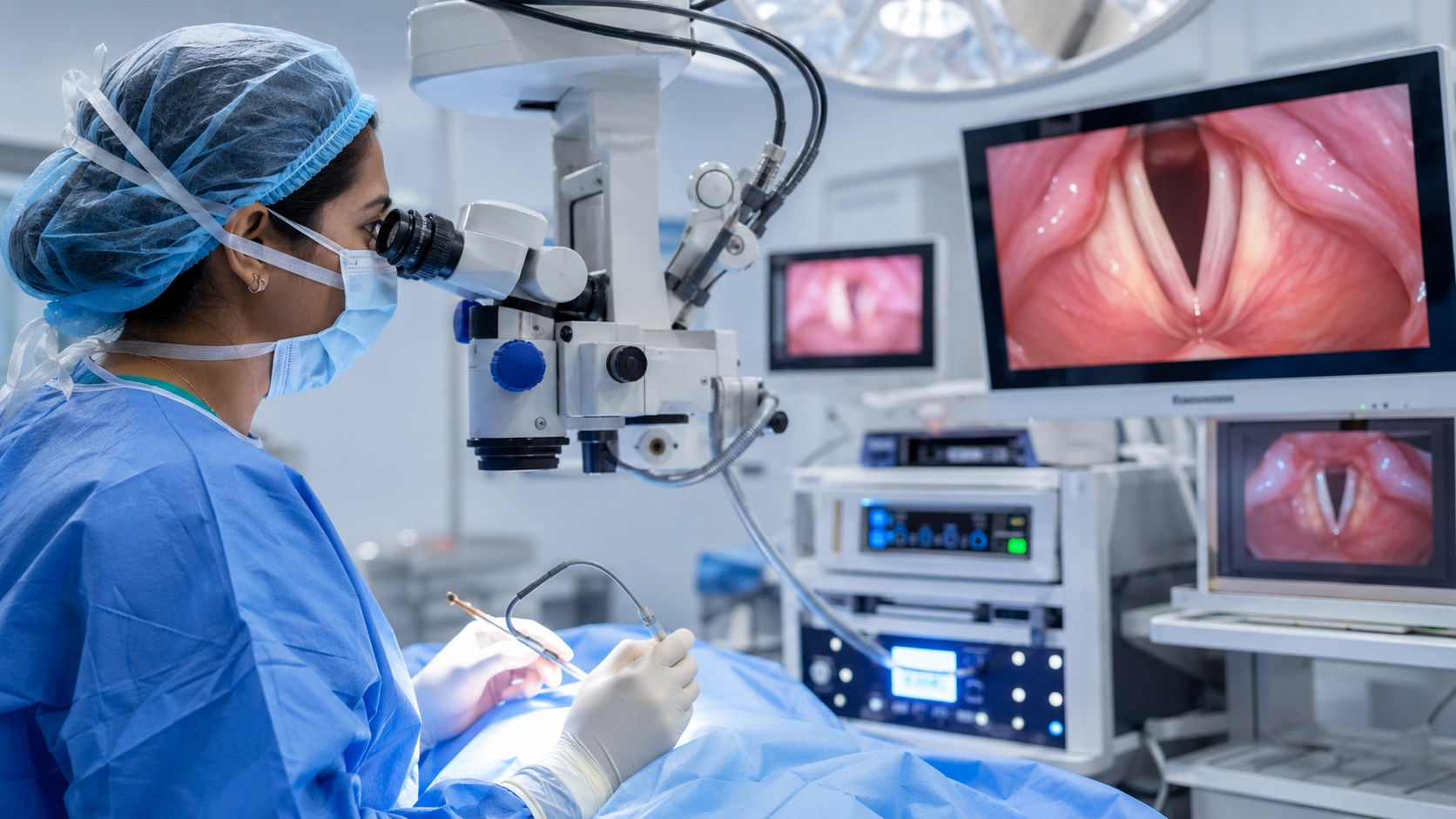
Microscopic laryngeal surgery is performed using an operating microscope with high-definition visualisation, giving a magnified, stable view of the vocal cords that isn't possible with the naked eye or standard endoscopy alone.
It's most often used to treat vocal cord nodules, polyps, cysts and similar lesions, where extremely fine, controlled movements make the difference between treating exactly what needs attention and affecting more than necessary.
For a more detailed guide to vocal cord nodules, polyps, cysts, microdissection, laser treatment, voice recovery and when surgery may be considered, read our article on microscopic laryngeal surgery in Rajkot .
Interactive Comparison
How Microscopic Laryngeal Surgery Is Performed
Two main techniques are used, sometimes on their own and sometimes together. Switch between the two to understand the general difference.
Fine, specialised instruments
Microdissection Technique
Fine specialised instruments are used under microscope magnification to carefully remove or treat vocal cord lesions with precise, controlled movements.
Precision energy-based treatment
Laser Technique
A precision laser is used under microscopic guidance for very fine, targeted treatment of select vocal cord findings.
The Difference Magnification Makes
Why Magnification Changes What's Possible in Voice Surgery
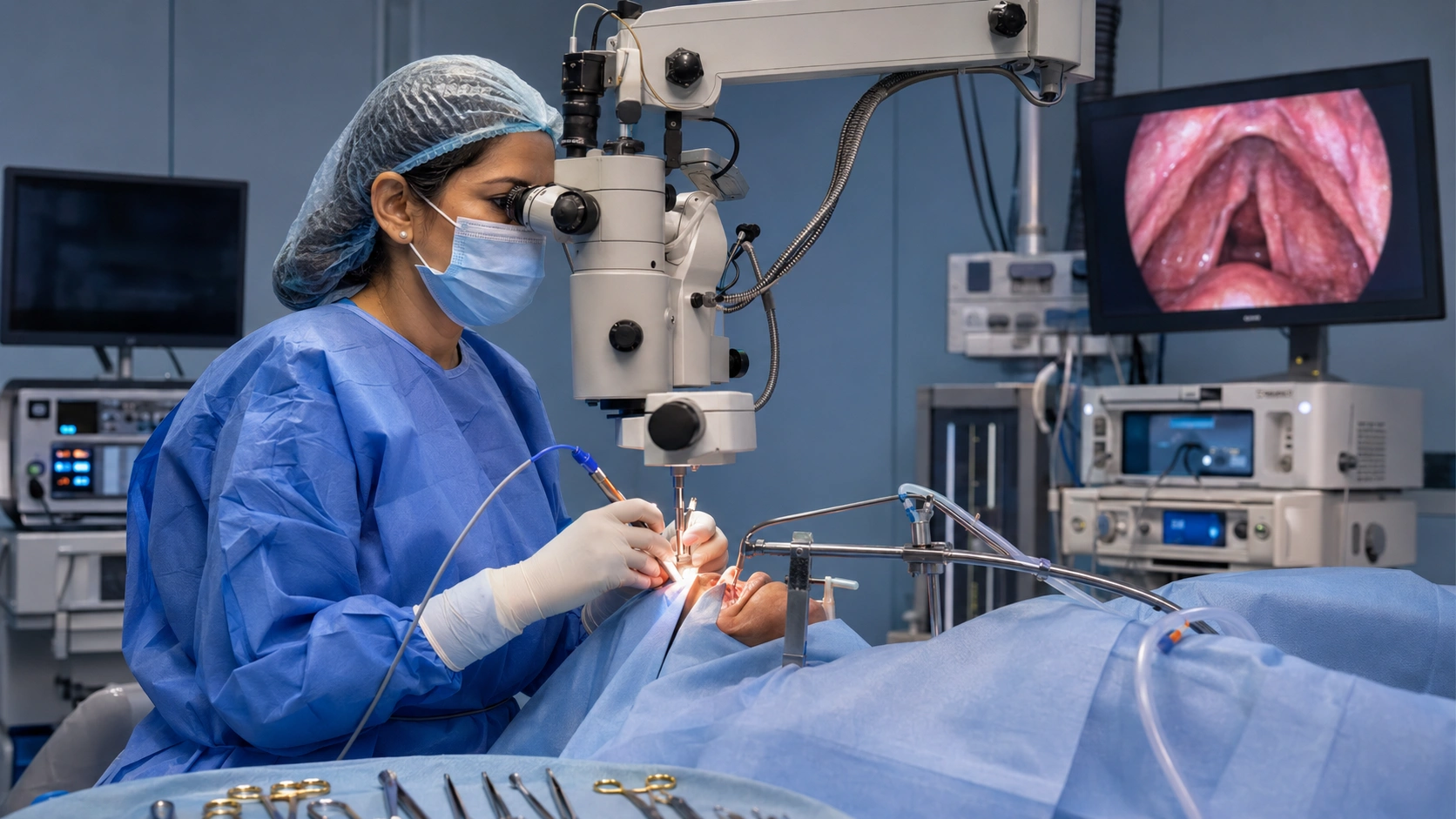
The vocal cords vibrate hundreds of times a second to produce sound, and they're only a few millimetres across. At that scale, the difference between treating exactly the right amount of tissue and treating slightly too much is enormous for voice quality.
An operating microscope provides a magnified, stable, three-dimensional view that makes this level of control possible, turning what would otherwise be guesswork into a precise, deliberate procedure.
You can't protect what you can't clearly see. Magnification is what makes precision possible in the first place.
Interactive Self-Check
Do Any of These Sound Familiar?
Tap anything that feels true for you. This is a simple starting point, not a diagnosis.
Your Self-Check
This self-check is for general awareness only and does not replace a proper clinical assessment.

How Care Is Planned
What May Be Included in Your Care
Care begins with a direct look at the vocal cords, then moves toward the technique best suited to what's found and how it's affecting your voice.
Vocal Cord Evaluation
Direct examination using video laryngoscopy to assess the vocal cords.
Microdissection Surgery
Precise removal or treatment of lesions using fine instruments under magnification.
Laser Laryngeal Surgery
Precision laser treatment for select findings where it offers a specific advantage.
Post-Surgical Voice Care
Structured recovery guidance, including voice rest and follow-up review.
Worth Knowing
A Few Quick Facts About Vocal Cord Surgery
Most Vocal Cord Lesions Are Benign
Nodules, polyps and cysts are common findings and are usually not cancerous.
Voice Rest Is Part of Recovery
Following voice rest guidance closely genuinely affects how well healing progresses.
Vocal Cords Are Only Millimetres Thick
This is exactly why magnification and precision instruments matter so much here.
Voice Therapy Often Complements Surgery
Addressing how the voice is used day to day supports a more lasting result.
Something Worth Knowing
Voice Rest Is Part of the Treatment, Not Just an Afterthought
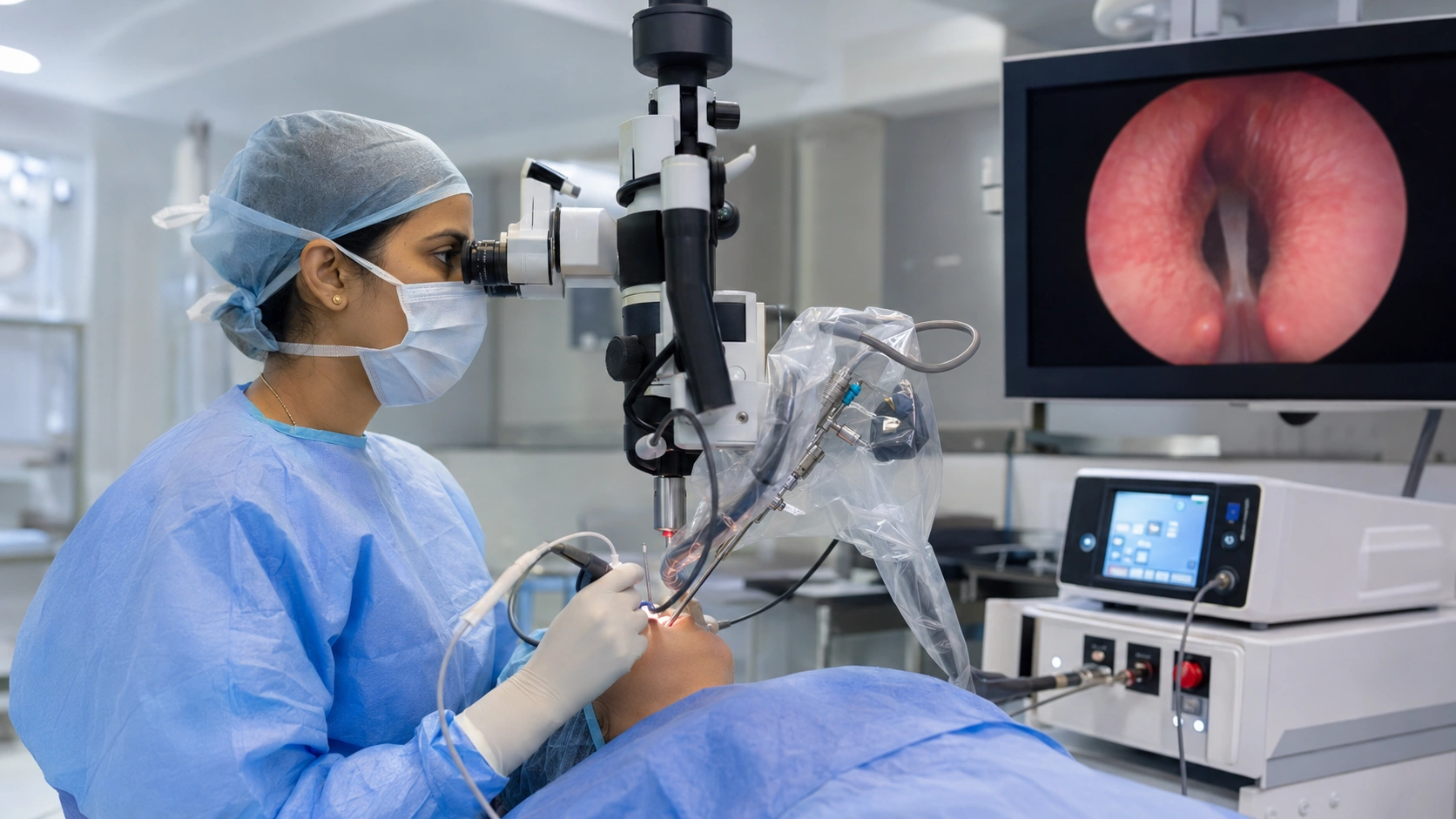
It's tempting to treat voice rest as optional once the procedure itself is done, especially when nothing feels overtly painful. But the vocal cords are healing tissue, and how they're used in those early days genuinely shapes the outcome.
Structured guidance after surgery exists for exactly this reason, so recovery is something you're supported through, not something you're left to guess at.
Consultation and Planning
How Voice Concerns Are Evaluated
- 01
Discuss Voice History and Symptoms
Explain how long changes have lasted, and how you use your voice day to day.
- 02
Vocal Cord Examination
A direct look at the vocal cords, usually using video laryngoscopy.
- 03
Plan the Surgical Approach
Decide between microdissection, laser technique, or a combination, based on findings.
- 04
Structured Recovery and Voice Care
Guided voice rest and follow-up to support the best possible healing.
Microscopic Laryngeal Surgery FAQs
Questions Before Your Surgery
General information about the procedure, recovery and voice care.
Ask a QuestionWhat conditions are treated with microscopic laryngeal surgery?
It's most often used for vocal cord nodules, polyps, cysts and similar lesions affecting voice quality.
Is this surgery painful?
It's performed under anaesthesia and most patients report manageable discomfort during early recovery rather than significant pain.
How long before I can talk normally again?
This varies by procedure and individual healing, and is discussed as part of your personalised recovery plan, including a period of voice rest.
Will my voice sound different afterward?
The aim is to preserve and improve voice quality by treating the lesion precisely. Specific expectations are discussed based on your findings.
What's the difference between laser and traditional instruments?
Both are used under microscopic guidance. The choice depends on the specific lesion and what will achieve the most precise, tissue-preserving result.
Do I need voice therapy after surgery?
It's often recommended alongside surgery, since addressing how the voice is used day to day supports a more lasting result.
Take the Next Step
Get a Clear Picture of What's Affecting Your Voice
Book a consultation with Dr. Manali Kakadia to discuss your voice symptoms, undergo a proper vocal cord evaluation, and understand the most precise path forward.