
Cosmetic Rhinoplasty in Rajkot
Cosmetic Rhinoplasty Planned for Natural Facial Balance
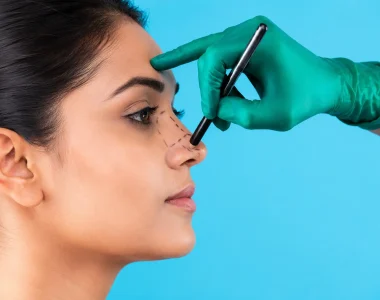
Cosmetic rhinoplasty changes the visible shape or proportions of the nose. Treatment is planned around the patient’s facial features, nasal anatomy, skin thickness and clearly defined goals.
- Complete facial and nasal proportion assessment
- Specific appearance concerns discussed before planning
- Realistic outcomes and limitations explained clearly
Understanding the Procedure
What Is Cosmetic Rhinoplasty?
Cosmetic rhinoplasty is surgery performed primarily to change the external appearance of the nose. Depending on the concern, treatment may involve the bridge, nasal hump, tip, width, nostrils, projection, alignment or the relationship between different parts of the nose.
Although the main objective is cosmetic, internal structure and breathing should still be evaluated. Planning should protect nasal support and function while considering the visible changes requested.
Explore Cosmetic Concerns
Which Area of the Nose Would You Like to Understand?
Select an area to view what may be examined and discussed during treatment planning.
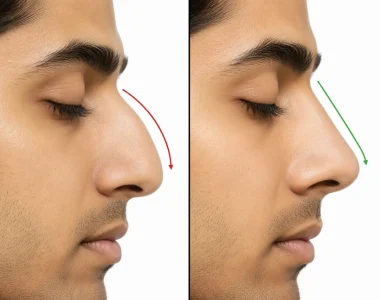
Bridge and dorsal contour
Nasal Hump or Bridge Shape
A visible hump or irregular bridge contour may be influenced by nasal bone, cartilage, projection and the relationship between the bridge and nasal tip.
- Bridge height and contour
- Tip-to-bridge relationship
- Side-profile balance
- Internal support and breathing
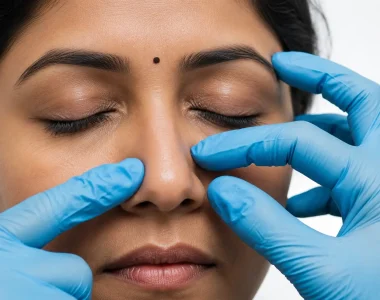
Tip shape and support
Broad, Bulbous, Drooping or Uneven Tip
Tip appearance depends on cartilage shape, skin thickness, projection, rotation and support. Refinement should maintain appropriate strength and proportion.
- Tip cartilage structure
- Skin thickness
- Projection and rotation
- Symmetry and support
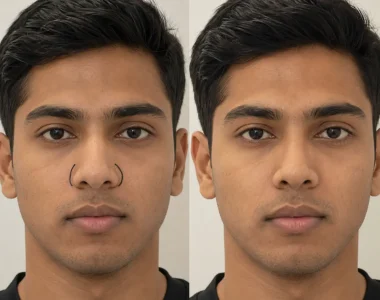
Front-view proportion
Wide Bridge, Broad Nose or Wide Nostrils
Perceived width can involve the nasal bones, middle portion, tip, nostril base or more than one area. Each component should be assessed before deciding what change may be suitable.
- Bridge and middle-vault width
- Tip width
- Nostril base and symmetry
- Proportion with facial width
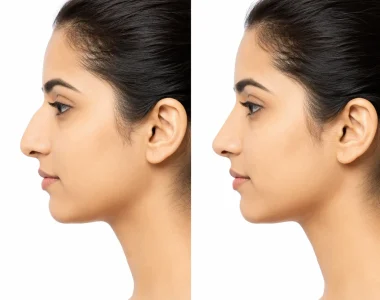
Symmetry and alignment
Crooked or Visibly Asymmetric Nose
Visible deviation may involve bone, cartilage, the internal septum or earlier trauma. External asymmetry and nasal airflow may need to be considered together.
- External alignment
- Septal position
- History of injury
- Airflow through both sides
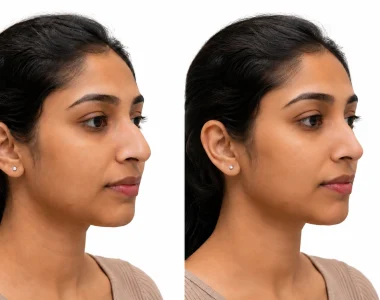
Profile relationship
Projection, Length and Facial Profile
A nose may appear overly projected, under-projected, long or disproportionate depending on its relationship with the forehead, lips and chin.
- Nasal projection and length
- Tip position
- Forehead, lip and chin relationship
- Overall side-profile balance
The Nose Within the Complete Face
Why Facial Balance Matters More Than One Isolated Feature
A nose that looks prominent from the side may not simply require a smaller bridge. Tip projection, forehead contour, lip position and chin projection can all influence how the nose is perceived.
For this reason, treatment planning should examine the complete face from front, side and three-quarter views. A change that suits one patient may appear unsuitable on another face with different proportions.
The purpose of planning is not to create mathematical perfection. It is to identify changes that may improve balance without removing the patient’s individual character.
Treatment Planning Priorities
What Does Cosmetic Rhinoplasty Planning Consider?
Select each planning priority to understand why the procedure is more detailed than changing one visible feature.
Facial relationship
Proportion Before Reduction
The bridge, tip, width and projection should be considered in relation to each other and to the complete face. Making one area smaller without considering the others may create imbalance.
Long-term support
Shape Depends on Structure
Bone and cartilage provide nasal support. Cosmetic change should preserve or reconstruct adequate support to reduce the risk of functional or contour problems.
Individual anatomy
Skin Thickness Influences Definition
Thin and thick skin behave differently after surgery. Skin thickness can influence how clearly structural changes become visible and how long swelling takes to settle.
Informed decisions
Realistic Expectations Are Essential
Surgery may improve selected features, but perfect symmetry, exact replication of another nose and guaranteed outcomes are not realistic objectives.
Understanding a Natural-Looking Result
Natural Does Not Mean Unchanged
A natural-looking result can still create a meaningful difference. The term describes a nose that appears proportionate and believable within the patient’s face rather than obviously operated or disconnected from other features.
Swelling also affects how the nose looks during recovery. Early appearance should not be treated as the final result because gradual refinement can continue for months.
- Which changes are realistically achievable?
- How may skin thickness affect definition?
- Which limitations apply to my anatomy?
- When can the result be assessed properly?
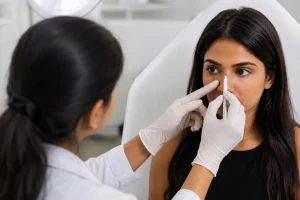
Realistic Decision Support
What Cosmetic Rhinoplasty May and May Not Do
Cosmetic Rhinoplasty May Help
- Refine a visible hump or bridge contour
- Adjust tip shape, projection or rotation
- Address nasal width or nostril concerns
- Improve visible alignment or asymmetry
- Create better proportion with other facial features
It Cannot Guarantee
- Perfect facial or nasal symmetry
- An exact copy of another person’s nose
- A completely predictable healing response
- An immediately visible final result
- Complete satisfaction without realistic expectations
Consultation and Planning
How Cosmetic Rhinoplasty Is Planned
Consultation should cover the requested changes, existing anatomy, health history, realistic outcomes, risks and recovery.
-
01
Define the Specific Concern
Discuss which features you would like evaluated and why the change matters to you.
-
02
Examine the Nose and Complete Face
The external nose, internal passages, facial proportions, skin thickness, cartilage support and breathing may be assessed.
-
03
Discuss Options and Limitations
Suitable changes, alternatives, likely limitations and potential risks are reviewed before any procedure is selected.
-
04
Plan Surgery and Recovery
Where surgery is appropriate, the procedure, hospital arrangements, aftercare and expected recovery are explained.
Cosmetic Rhinoplasty FAQs
Common Questions Before Consultation
General answers about cosmetic goals, planning, scars, recovery and realistic results.
Ask a QuestionWhat concerns can cosmetic rhinoplasty address?
It may address concerns involving the bridge, hump, tip, width, nostrils, projection, alignment or overall nasal proportion. Suitability depends on individual anatomy and goals.
Can I choose a nose from another person’s photograph?
Photographs may help explain preferences, but another person’s nose cannot simply be reproduced. Facial structure, skin, cartilage and proportions differ between patients.
Will cosmetic rhinoplasty affect breathing?
Internal support and airflow should be evaluated during planning. Cosmetic changes should be designed with nasal structure and function in mind.
Will there be visible scars?
Scar placement depends on the surgical approach. The surgeon should explain the proposed incisions, expected healing and scar care during consultation.
When will I see the final result?
Initial swelling reduces gradually, but refinement may continue for several months and can take up to a year in some patients. Recovery varies by procedure and individual healing.
How much does cosmetic rhinoplasty cost?
Cost varies according to the complexity of treatment, hospital arrangements, anaesthesia, investigations and follow-up requirements. A personalised estimate can be given after assessment.
Take the Next Step
Discuss the Changes You Are Considering
Book a consultation with Dr. Manali Kakadia to understand which cosmetic rhinoplasty options may be appropriate for your facial features, nasal anatomy and goals.