
Oral Cavity Biopsy in Rajkot
Oral Cavity Biopsies for Clear Answers About Mouth Sores and Lesions
A sore, patch or lump in the mouth that hasn't healed as expected is worth a proper look. A biopsy is a routine, well-established way to get a definite answer, rather than waiting and wondering.
- A biopsy is a diagnostic step, not a diagnosis in itself
- Sample examined by expert pathology review
- Results explained clearly, with time for your questions
Understanding the Procedure
What Is an Oral Cavity Biopsy?
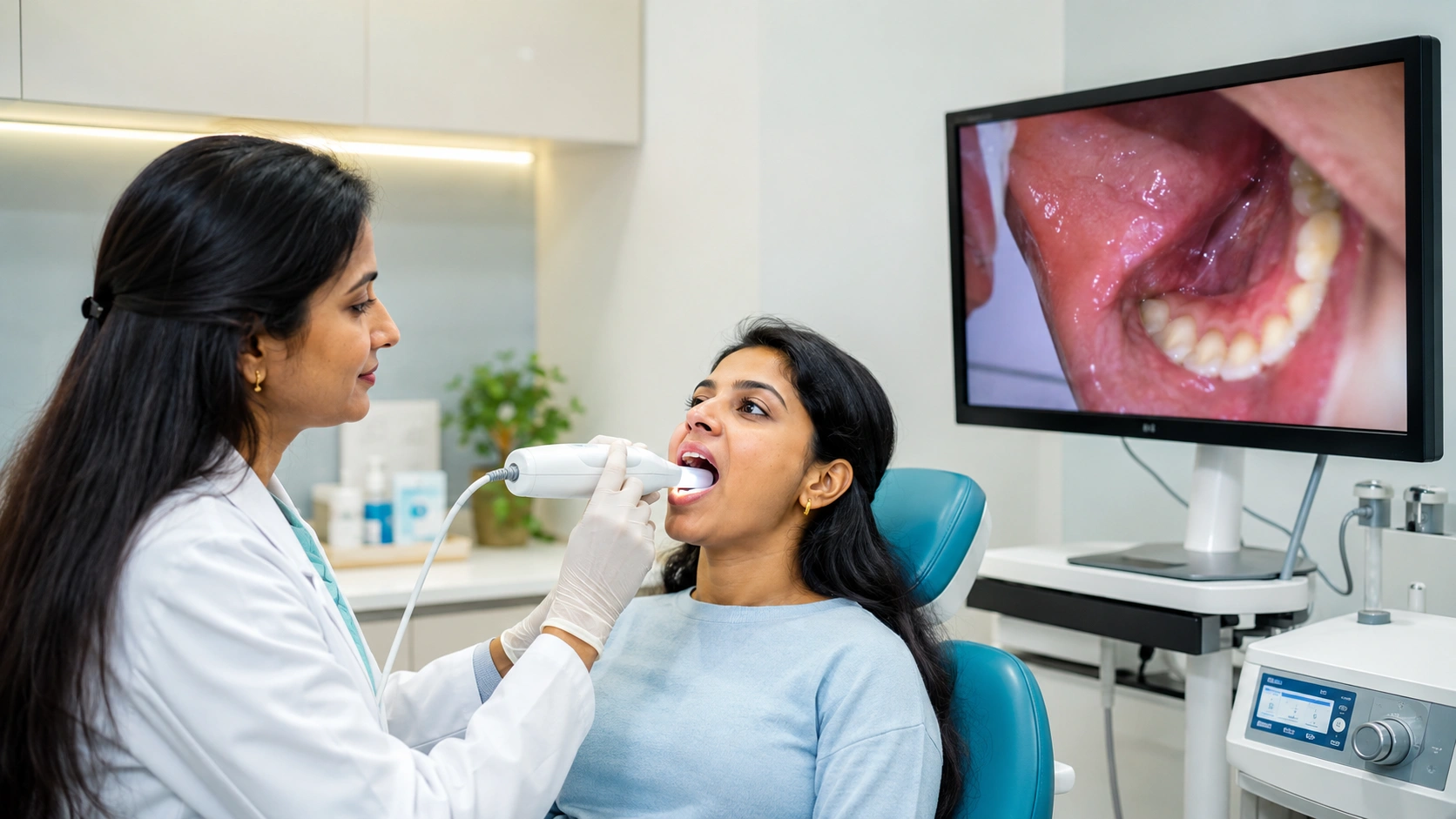
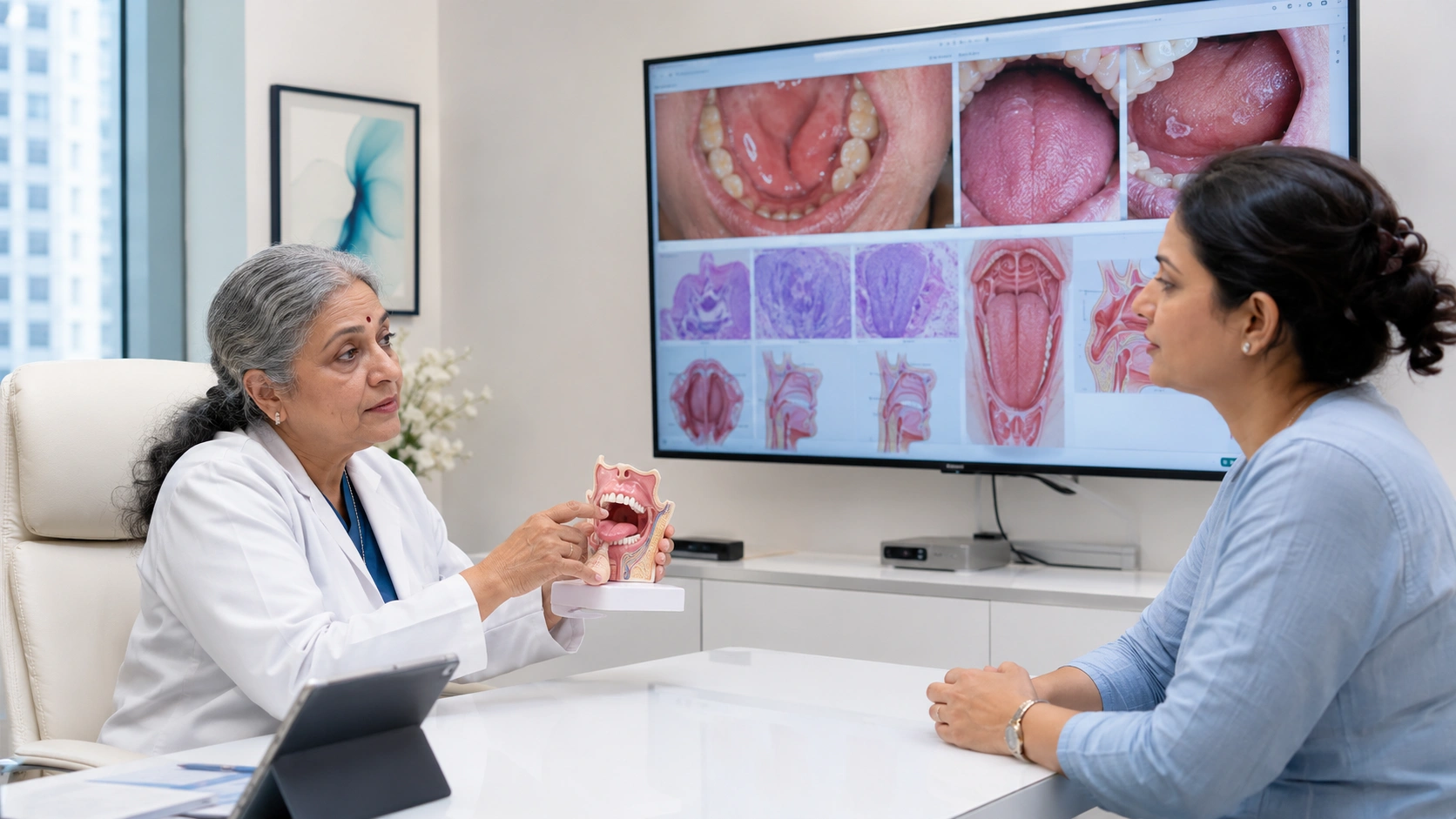
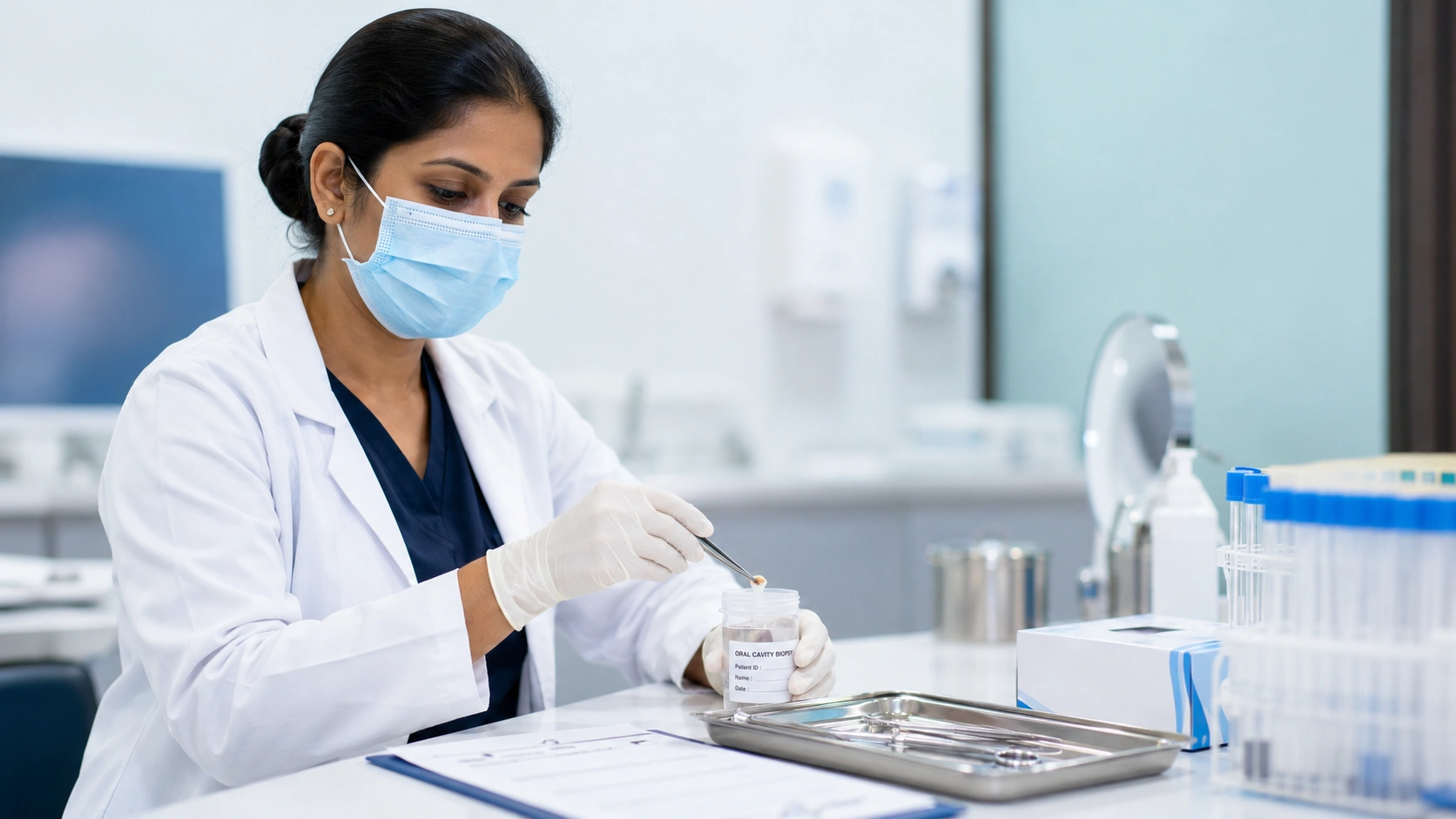
An oral biopsy involves taking a small sample of tissue from a sore, patch or lesion inside the mouth and sending it for pathology review, where it's examined under a microscope to determine exactly what it is.
It's typically considered when a mouth sore or unusual area hasn't healed within the expected timeframe, looks different from a typical ulcer, or simply needs a definite answer rather than continued observation.
For a more detailed guide to persistent mouth sores, oral lesions, biopsy types, the procedure, pathology results, recovery and when tissue sampling may be recommended, read our article on oral cavity biopsy in Rajkot .
Interactive Comparison
Types of Oral Biopsy: What's the Difference?
The right approach depends on the size and appearance of the area being evaluated. Switch between the two to see how.
A representative sample
Incisional Biopsy
A small sample is taken from part of a larger or less clearly defined area, enough to characterise it without removing the entire lesion.
Complete removal
Excisional Biopsy
The entire lesion is removed when it's small and well-defined enough to be taken out completely in one procedure.
Reframing a Word That Sounds Scarier Than It Is
Why a Biopsy Doesn't Mean the Worst Is Assumed
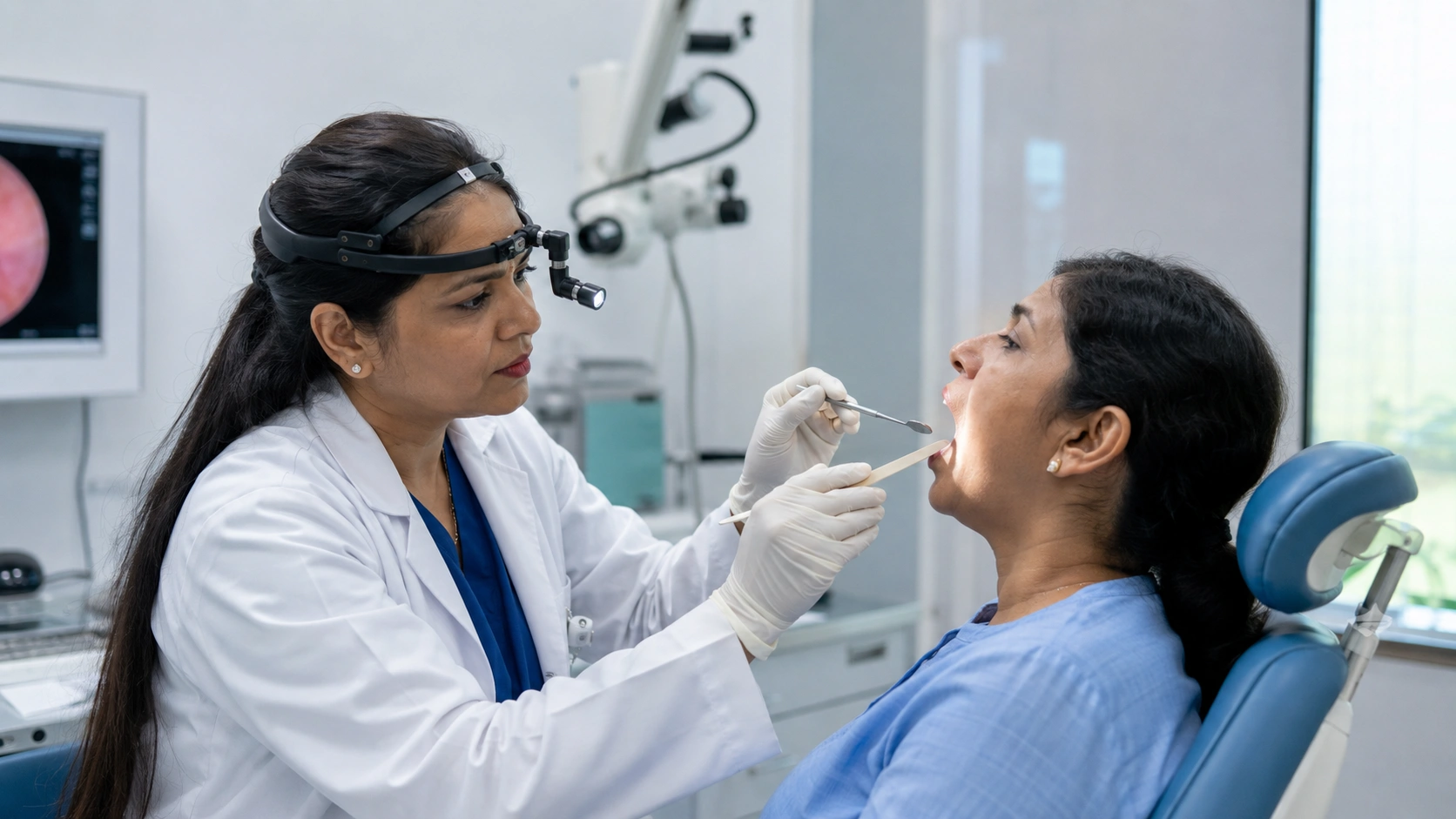
Hearing "you need a biopsy" can feel like a loaded moment, but it's a standard, thorough step for any mouth lesion that hasn't resolved as expected, not a signal that something serious has already been assumed.
Many biopsied lesions turn out to be irritation, minor trauma, or other benign findings once examined properly. The point of the biopsy is precisely to find that out, rather than guess.
Recommending a biopsy is thoroughness, not a prediction. The result is what actually tells the story.
Interactive Self-Check
Do Any of These Sound Familiar?
Tap anything that feels true for you. This is a simple starting point, not a diagnosis.
Your Self-Check
This self-check is for general awareness only and does not replace a proper clinical assessment.
How Care Is Planned
What May Be Included in Your Visit
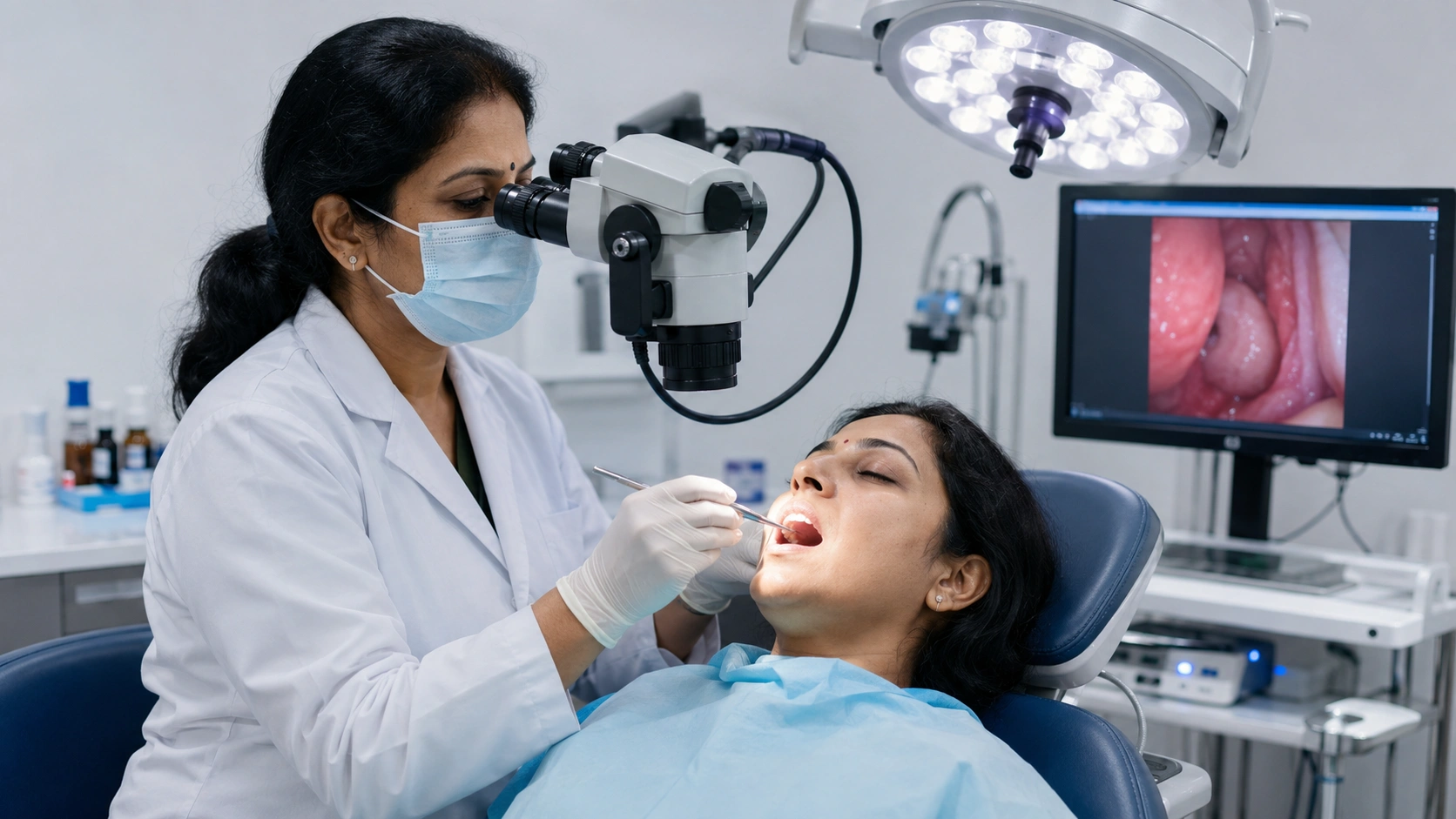
Care moves from a careful examination through to sampling and a clear discussion of results, so every step builds toward an actual answer.
Oral Examination & Documentation
A close clinical examination, with the finding documented for reference.
Incisional Biopsy
A representative sample taken from larger or less clearly defined areas.
Excisional Biopsy
Complete removal of smaller, well-defined lesions in a single procedure.
Results & Follow-Up Care
A clear discussion of pathology findings and the appropriate next step.
Worth Knowing
A Few Quick Facts About Oral Lesions
Most Mouth Ulcers Heal Within Two Weeks
Something that lingers well beyond that is the main signal worth paying attention to.
A Biopsy Is a Diagnostic Tool
It's used to find out what something is, not as a treatment decision by itself.
Tobacco and Areca Nut Are Known Risk Factors
Regular use is one of several reasons an oral finding may be evaluated more closely.
Earlier Evaluation Leads to Simpler Findings
Getting something checked sooner generally means clearer, easier answers either way.
Something Worth Knowing
Waiting for Results Is Often the Hardest Part, and That's Normal
The days between a biopsy and its results can feel longer than they actually are. Feeling anxious during that stretch doesn't mean anything about what the result will show, it's simply a normal response to waiting for an answer.
Once results are ready, they're explained clearly and in person, with time set aside for your questions, whatever the outcome turns out to be.
Consultation and Planning
How an Oral Cavity Biopsy Is Approached
- 01
Discuss the Lesion and History
Explain how long it's been present, any habits or triggers, and relevant medical history.
- 02
Oral Examination & Documentation
A close clinical examination, with the finding recorded for reference.
- 03
Biopsy Procedure
A quick sampling procedure, usually under local anaesthesia.
- 04
Results Discussion and Next Steps
A clear conversation about the pathology findings and what happens next.
Oral Cavity Biopsy FAQs
Questions Before Your Visit
General information about the procedure, results and recovery.
Ask a QuestionIs an oral biopsy painful?
It's performed under local anaesthesia, so the procedure itself is generally well tolerated with only mild discomfort afterward.
How long does it take to get results?
Pathology results typically take about a week to ten days, and the timeline is discussed with you at the time of the procedure.
Does having a biopsy mean I have cancer?
No. A biopsy is recommended to find out exactly what a finding is. Many lesions biopsied turn out to be benign or inflammatory in nature.
How is the biopsy site cared for afterward?
Simple aftercare guidance is provided, and most sites heal without significant issues within one to two weeks.
Will there be a scar or lasting change?
Most oral biopsy sites heal well with minimal visible change, particularly for smaller excisional biopsies.
What if the results show something needing further treatment?
If that's the case, the findings and the appropriate next steps are explained clearly, and you're supported through what comes next.
Take the Next Step
Get a Clear Answer About What You've Noticed
Book a consultation with Dr. Manali Kakadia to have a mouth sore, patch or lump properly examined, and understand whether a biopsy is the right next step for your specific case.