
Hearing and Voice Evaluation in Rajkot
Hearing and Voice Evaluation for Clearer Sound and a Stronger Voice
Hearing changes and voice changes often develop slowly enough to go unnoticed for a while. A proper evaluation looks directly at what's happening, rather than waiting to see if it resolves on its own.
- Objective testing, not guesswork based on symptoms alone
- Hearing and voice can be assessed in the same visit
- Clear explanation of findings and next steps

Understanding the Evaluation
What Does a Hearing and Voice Evaluation Involve?
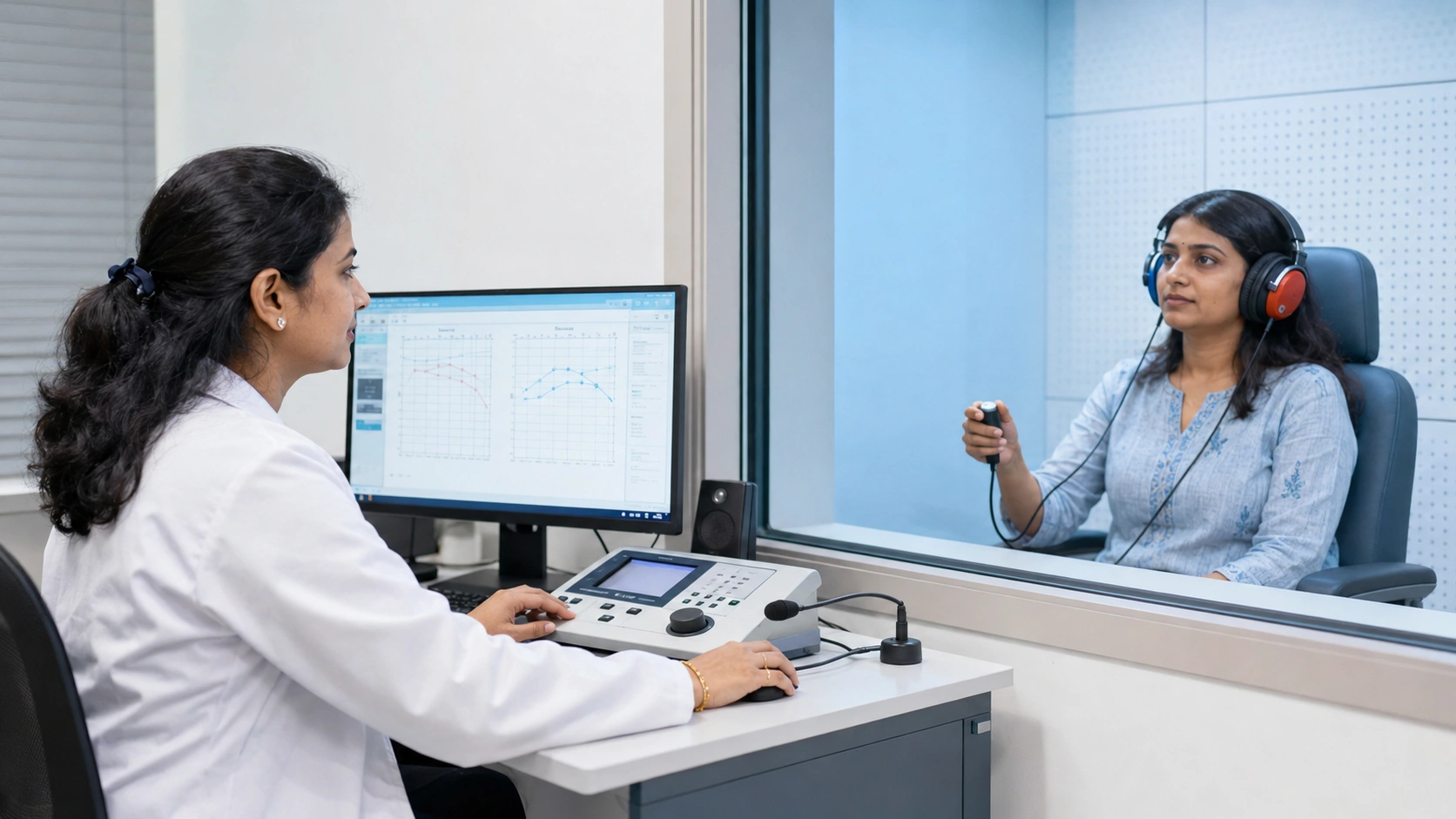
A hearing evaluation measures how well you hear across different pitches and volumes, using objective testing rather than relying on how things "feel" day to day. A voice evaluation looks directly at the vocal cords to understand what might be affecting how your voice sounds or feels.
The two are often connected. Ageing, reflux, smoking and general health can all affect hearing and voice together, which is why both are sometimes assessed in the same visit.
For a more detailed guide to hearing changes, voice symptoms, common causes, diagnostic tests and when specialist assessment may be useful, read our article on hearing and voice evaluation in Rajkot .
Interactive Comparison
Which Evaluation Do You Need?
Switch between the two to see the common signs, causes and tests typically involved in each.
Focused on how you hear
Hearing Evaluation
A hearing evaluation objectively measures how well sound is picked up and processed, rather than relying on how hearing feels day to day.
Focused on how you sound
Voice Evaluation
A voice evaluation looks directly at the vocal cords to understand what might be behind hoarseness, vocal fatigue or a voice that sounds different than usual.

A Symptom That's Easy to Talk Yourself Out Of
Why Voice Changes Are Easy to Dismiss, But Shouldn't Be
A slightly rougher voice after a long week, a loud event, or a cold rarely raises concern, and usually shouldn't. The trouble is when that "slightly rougher" voice becomes the new normal without anyone really noticing the shift.
Video laryngoscopy allows the vocal cords to be seen directly, which is often the only way to tell the difference between ordinary strain and something that actually needs treatment.
A voice that's quietly changed over months is easy to miss from the inside. It's rarely subtle from the outside.
Interactive Self-Check
Do Any of These Sound Familiar?
Tap anything that feels true for you. This is a simple starting point, not a diagnosis.
Your Self-Check
This self-check is for general awareness only and does not replace a proper clinical assessment.

Behind the Scenes
Types of Hearing and Voice Tests, Explained Simply
The right test depends on what's being assessed. Here's a simple breakdown of what's commonly used and what each one actually tells us.

How Care Is Planned
What May Be Included in Your Visit
The right combination of tests and follow-up depends on what you've noticed and what's found during examination, building toward a clear explanation and a practical plan.
Hearing Assessment
Objective testing to measure hearing across different pitches and volumes.
Voice & Laryngeal Assessment
A direct examination of the vocal cords using video laryngoscopy.
Diagnostic Testing
Additional testing where needed to confirm findings and guide treatment.
Follow-Up & Management
Ongoing support and monitoring based on what's identified.
Worth Knowing
A Few Quick Facts About Hearing and Voice
Hearing Loss Often Develops Gradually
Changes can be so slow that the people around you notice before you do.
Voice Changes Can Signal More Than Strain
Persistent hoarseness isn't always just tiredness. It's worth having examined directly.
Both Can Share the Same Underlying Cause
Ageing, reflux and smoking can all affect hearing and voice together.
Earlier Evaluation Preserves More Options
Catching a change earlier generally means more straightforward management.
A Quick Reference
When Evaluation Is Worth Considering
For Hearing Concerns
- Trouble following conversations, especially in groups
- Frequently increasing the volume on devices
- Ringing or noise that doesn't go away
- A sudden change in hearing on one side
For Voice Concerns
- Hoarseness lasting more than two weeks
- A voice that tires quickly during normal use
- A voice that sounds persistently different
- Discomfort or strain when speaking
Something Worth Knowing
Neither Concern Needs to Be Severe to Get Checked
A hearing or voice change doesn't need to be dramatic to be worth mentioning. Sometimes it's just a quiet sense that something isn't quite as sharp, or as clear, as it used to be.
That's enough of a reason to have it looked at properly, rather than waiting for it to become obvious to everyone else first.
Consultation and Planning
How a Hearing and Voice Evaluation Works
- 01
Discuss What You've Noticed
Explain any hearing or voice changes, and how long they've been present.
- 02
Hearing and/or Voice Examination
Objective testing and direct examination, based on your specific concern.
- 03
Identify the Cause
Confirm what's actually behind the change, using the findings from testing.
- 04
Plan Treatment or Further Care
Discuss the appropriate next step and any follow-up needed.
Hearing and Voice FAQs
Questions Before Your Visit
General information about testing, evaluation and what to expect.
Ask a QuestionHow long does a hearing test take?
A standard hearing assessment is typically brief and completed within the same consultation visit.
Is a voice evaluation uncomfortable?
Video laryngoscopy is generally quick and well tolerated, giving a clear view of the vocal cords without major discomfort.
Can hearing and voice be evaluated in the same visit?
Yes, when both are relevant to your concern, they're often assessed together in a single consultation.
At what age should hearing be checked?
There's no single fixed age. It's worth checking whenever changes are noticed, at any stage of life.
Can voice changes be reversed?
Many can improve significantly with the right treatment, depending on the underlying cause identified during evaluation.
Do I need a referral for these evaluations?
No. You can book directly to discuss hearing or voice concerns, even if you're not sure exactly what's causing them.
Take the Next Step
Find Out What's Actually Behind Your Hearing or Voice Change
Book a consultation with Dr. Manali Kakadia to discuss what you've noticed, undergo the right evaluation, and get a clear plan built around the actual cause.