
Nasal Polyp Treatment in Rajkot
Nasal Polyp Treatment for Clearer Breathing and Restored Smell
Nasal polyps are soft, non-cancerous growths that can block airflow, reduce your sense of smell, and keep coming back if the underlying triggers aren't addressed alongside treatment.
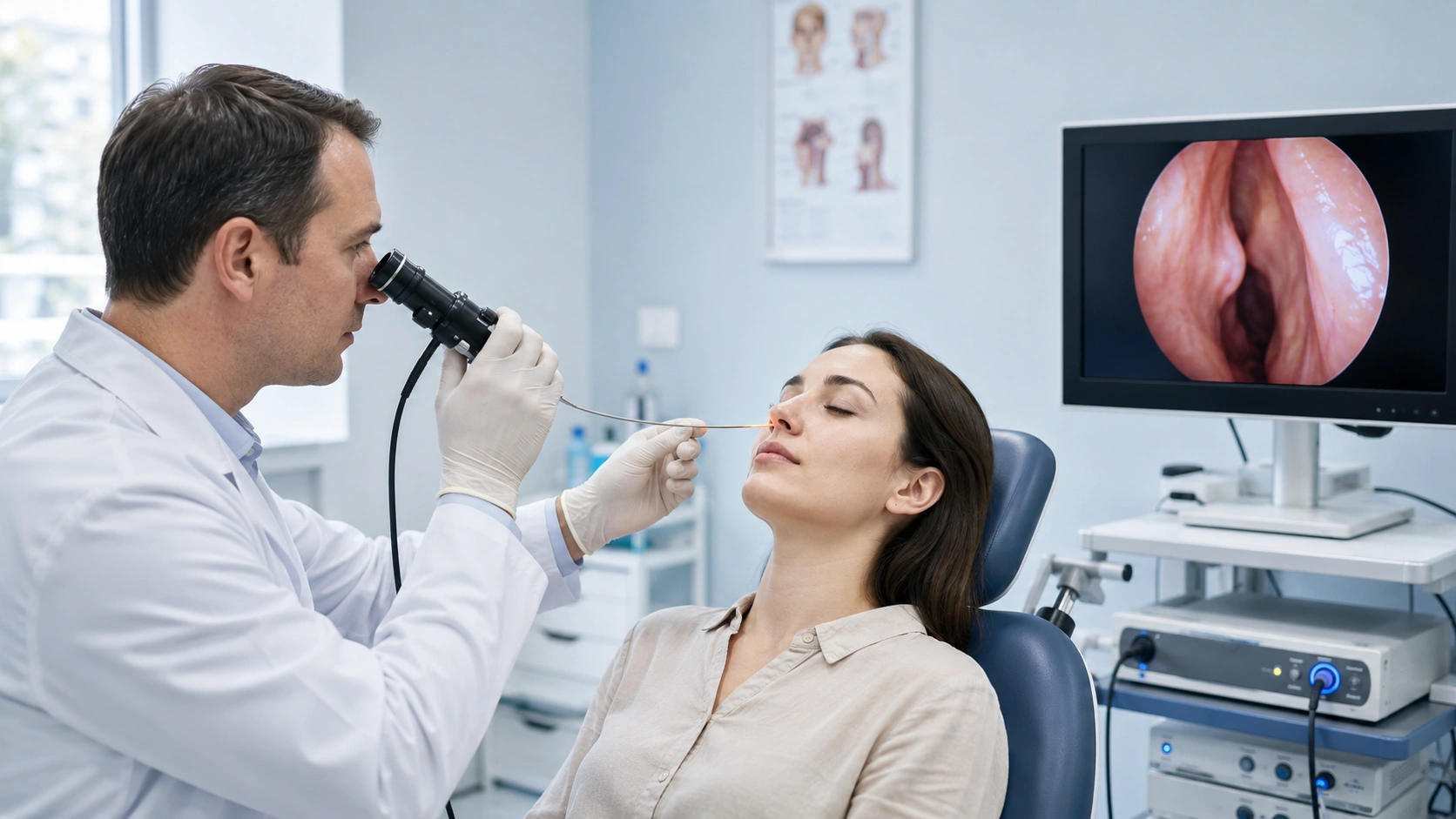
- Confirmed through nasal endoscopy, not guesswork
- Medical treatment considered before surgical options
- Recurrence factors addressed, not just current symptoms
Understanding Nasal Polyps
What Are Nasal Polyps?
Nasal polyps are soft, painless, non-cancerous growths that develop from prolonged inflammation of the nasal or sinus lining. They can range from small and barely noticeable to large enough to significantly block airflow.
They're frequently linked with allergic conditions, asthma and chronic sinusitis, which is why treatment usually looks at those connections rather than just the growths themselves.
Interactive Care Path Finder
Could Nasal Polyps Be Behind Your Symptoms?
Answer four quick questions for a general sense of how closely your symptoms overlap with typical nasal polyps. This is guidance, not a diagnosis.
How would you describe your sense of smell?
How does your nasal blockage behave?
Do you have a history of asthma or ongoing allergies?
Have you been diagnosed with nasal polyps before?
Result
Result description.
This is general educational guidance only, not a diagnosis. A nasal endoscopy is the only reliable way to confirm whether polyps are present.

Confirming the Full Picture
Why Imaging Sometimes Confirms What Endoscopy Suggests
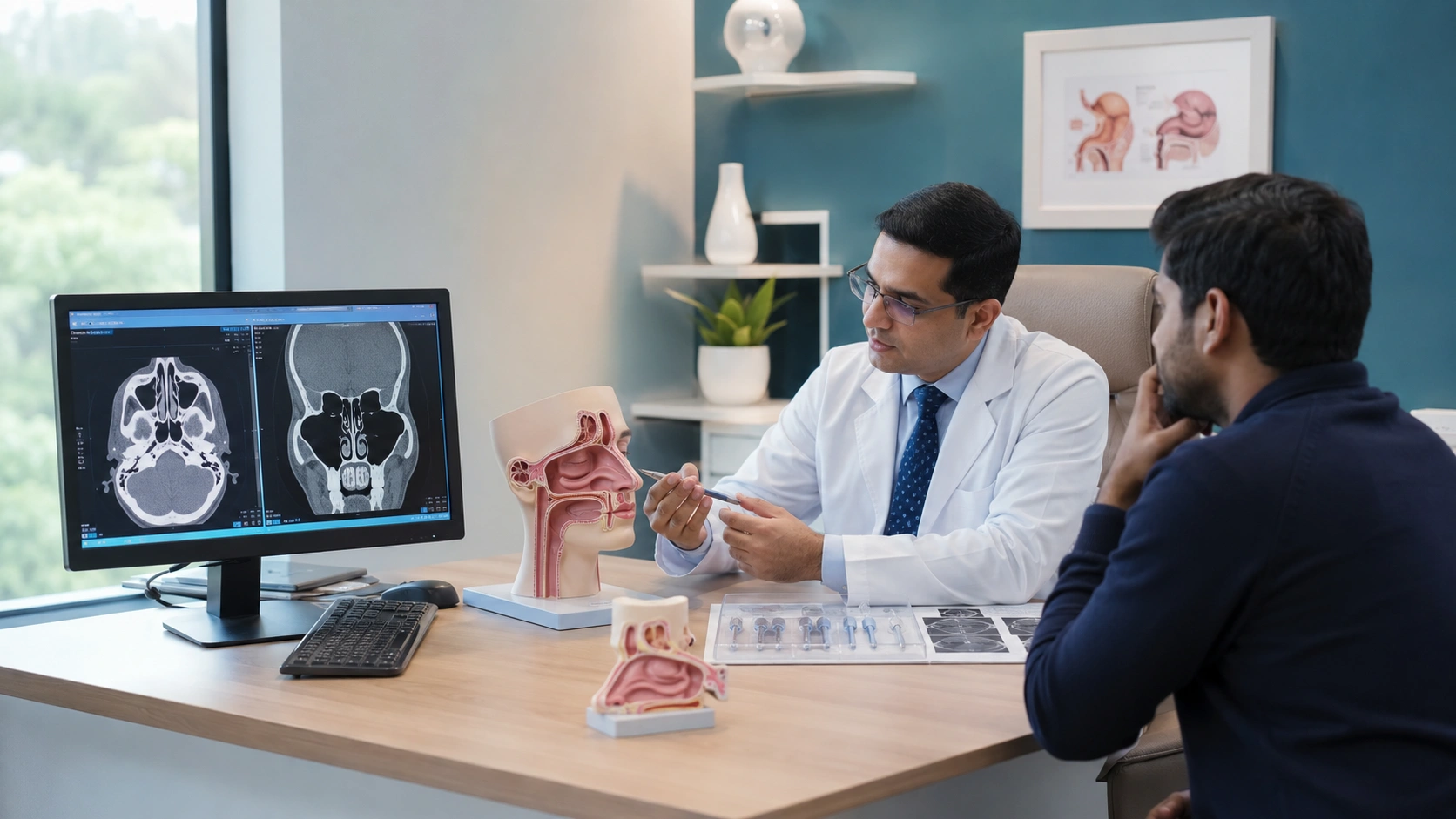
Nasal endoscopy gives a clear view of what's visible inside the nose, but polyps can also extend into the sinuses themselves, areas endoscopy alone can't always fully assess.
A CT scan is used selectively, mainly when surgery is being considered, to map exactly how far the polyps extend and to plan the procedure with more precision.
Seeing the full extent of something is usually what turns a reasonable plan into a genuinely precise one.
Common Misunderstandings
Myths vs Facts About Nasal Polyps
Tap a card to reveal the fact.
Interactive Comparison
How Nasal Polyps Are Typically Managed
Switch between the two approaches to see what each usually involves.
Usually tried first
Medical Management
For many patients, especially with smaller polyps, treatment starts with medication aimed at reducing inflammation and controlling underlying triggers.
- Nasal steroid sprays or drops, used consistently
- A short course of oral steroids in select cases
- Saline nasal rinses to support the lining
- Allergy or asthma treatment addressed alongside
Considered when needed
Surgical Management
When polyps are large, significantly blocking the airway, or haven't responded adequately to medical treatment, endoscopic removal may be the next step.
- Performed entirely through the nostrils
- Often combined with a FESS-style approach
- Followed by continued medical treatment to reduce recurrence
- Considered once medical options have been explored
How Care Is Planned
What May Be Included in Your Treatment
Care is built around your specific findings, from the size and location of the polyps to how much they're affecting breathing, smell and daily comfort.
Nasal Endoscopy Evaluation
A detailed internal examination to confirm the presence and extent of polyps.
Medical Polyp Management
Medication-based treatment to reduce polyp size and control inflammation.
Endoscopic Polyp Removal
Surgical removal through the nostrils when medical treatment isn't enough.
Long-Term Recurrence Management
Ongoing care plans that address the triggers most likely to bring polyps back.
Worth Knowing
A Few Quick Facts About Nasal Polyps
Smell Loss Is a Common Early Sign
A reduced sense of smell is often one of the first noticeable clues, sometimes before blockage becomes obvious.
Allergies and Asthma Are Frequently Linked
People with ongoing allergic rhinitis or asthma are more likely to develop nasal polyps.
Polyps Are Not Cancerous
They are benign growths related to inflammation, not a cancerous process.
Recurrence Is Common Without Ongoing Management
Without managing the underlying trigger, polyps often return even after successful treatment.

Preventing a Repeat
What Can Increase the Chance of Recurrence
Certain patterns make polyps more likely to return after treatment. Being aware of them is part of building a treatment plan that lasts, not just one that works temporarily.
- Allergic triggers that remain unmanaged
- Asthma that isn't well controlled
- Stopping maintenance nasal treatment too early
- Certain individual sensitivities affecting the airway

Something Worth Knowing
Losing Your Sense of Smell Isn't Something to Just Accept
It's easy to quietly adjust to a dulled sense of smell over time, especially when it happens gradually. Many people don't realise how much they've lost until it starts coming back.
It doesn't need to have been happening for years to be worth mentioning. Describing what you've noticed, however vague, is more than enough reason to book an evaluation.
Consultation and Planning
How Nasal Polyps Are Evaluated
- 01
Discuss Symptoms and History
Explain smell changes, blockage pattern, and any allergy or asthma history.
- 02
Endoscopic Examination
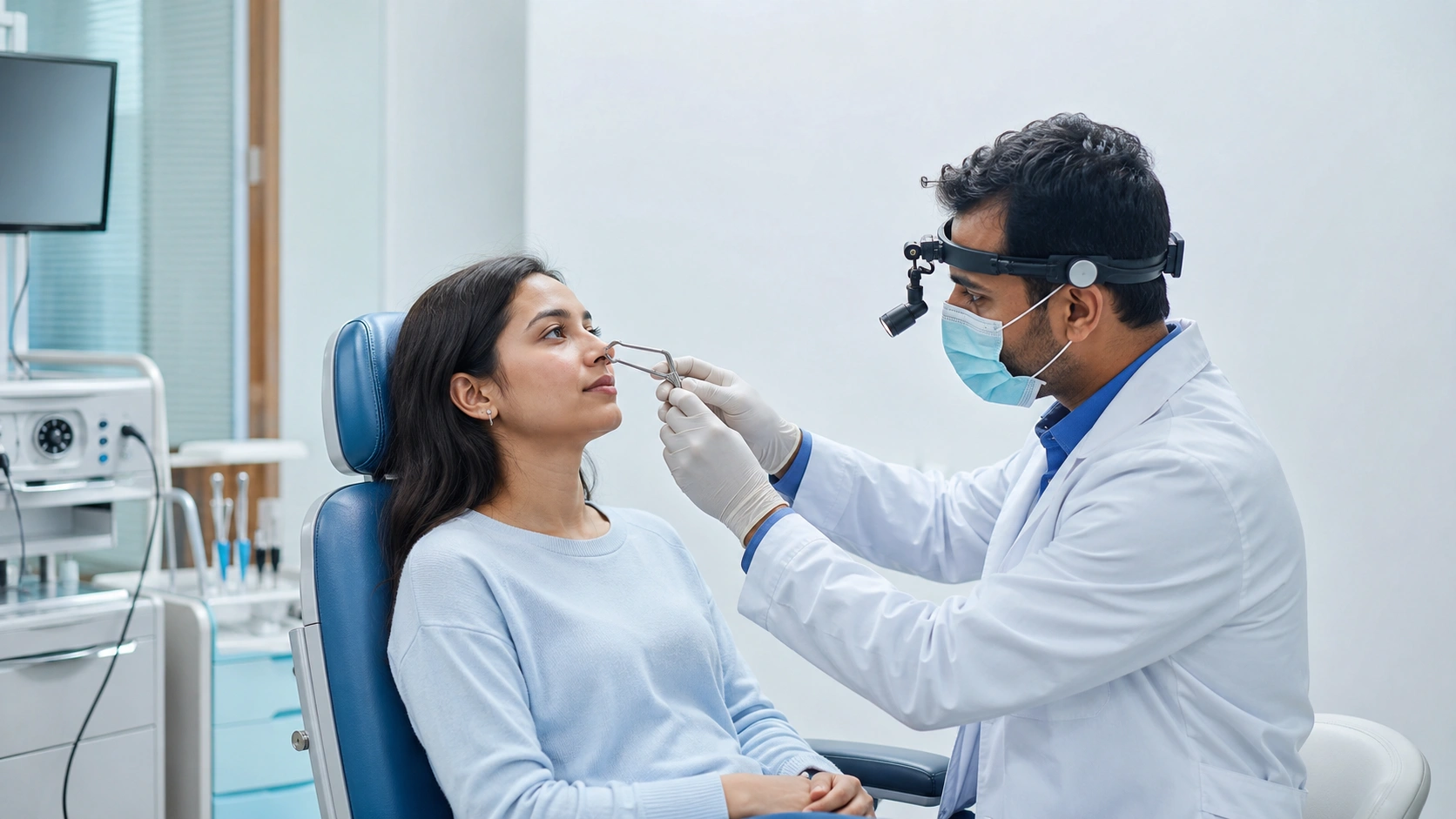
A direct, magnified view inside the nose to confirm the presence of polyps.
- 03
Imaging If Needed
A CT scan is used selectively, mainly when surgery is being considered.
- 04
Plan Medical or Surgical Treatment
Start with the most appropriate option and plan for reducing recurrence long term.
Nasal Polyp FAQs
Questions Before Your Visit
General information about symptoms, evaluation, treatment and recurrence.
Ask a QuestionWhat are nasal polyps exactly?
They are soft, non-cancerous growths that develop from prolonged inflammation of the nasal or sinus lining.
Are nasal polyps dangerous?
They are not cancerous, but larger polyps can significantly affect breathing, smell and quality of life if left untreated.
Can polyps be treated without surgery?
Many cases respond well to medical treatment such as nasal steroids and allergy management, especially when caught earlier.
Do nasal polyps always come back after removal?
Not always, but recurrence is common if underlying triggers like allergy or asthma aren't managed alongside treatment.
Why do I need a CT scan if endoscopy already found polyps?
A CT scan maps how far polyps extend into the sinuses, which helps with precise surgical planning when surgery is being considered.
Will my sense of smell come back after treatment?
It often improves significantly after treatment, though the extent of recovery depends on the individual case.
Take the Next Step
Find Out Whether Nasal Polyps Are Behind Your Symptoms
Book a consultation with Dr. Manali Kakadia to discuss your symptoms, undergo a proper endoscopic evaluation, and get a treatment plan built around the actual cause.