
Nose & Sinus ENT Specialist
Nose and Sinus ENT Treatment
Persistent blockage, facial pressure, repeated infections or a reduced sense of smell are not something you simply have to live with. A focused ENT evaluation looks at the nose, sinuses and airway together to understand what is actually causing it.
- Nose, sinuses and airway examined together
- Nasal endoscopy used where clinically useful
- Treatment matched to the actual cause, not just symptoms


Understanding Nose and Sinus Care
What Does Nose and Sinus ENT Care Involve?
The nose and sinuses work as one connected system. Blockage, pressure, discharge or reduced smell can come from the septum, turbinates, sinus lining, allergies, or a combination of these, so a focused evaluation looks at the whole system rather than treating one symptom at a time.
Nasal endoscopy allows a closer, more accurate look inside the nose than a standard external examination, which helps identify the actual source of the problem before deciding on treatment.
ENT Treatment Information
Nose and Sinus Care at a Glance
| Common Concerns | Blocked nose, sinus pressure, recurrent sinusitis, reduced smell, nasal polyps, septal deviation and recurrent nosebleeds |
|---|---|
| Assessment | Symptom history, nasal examination and nasal endoscopy where clinically appropriate |
| Treatment Approach | Medical treatment, monitoring, septal surgery or endoscopic sinus procedures according to the diagnosis |
| Follow-Up | Depends on symptom duration, treatment response and whether a procedure is required |
Common Nose and Sinus Conditions
Explore Common ENT Concerns
Select a concern to understand what may contribute to the symptoms and how ENT assessment can help.

Airway symptoms
Persistent Nasal Blockage
Nasal obstruction can result from inflammation, allergy, enlarged turbinates, a deviated septum, polyps or several factors acting together. Persistent symptoms are better evaluated by identifying the cause rather than repeatedly using short-term relief.
- One-sided or bilateral congestion
- Mouth breathing or disturbed sleep
- Symptoms that recur after temporary improvement
- Reduced airflow despite routine treatment

Sinus inflammation
Recurrent or Persistent Sinusitis
Sinusitis can cause congestion, facial pressure, nasal discharge and reduced smell. When episodes repeatedly return or symptoms persist, an ENT review can help distinguish prolonged inflammation from other conditions with similar symptoms.
- Repeated sinus episodes
- Facial pressure with nasal symptoms
- Reduced or altered sense of smell
- Persistent drainage or congestion

Structural obstruction
Deviated Nasal Septum
A septum that is significantly off-centre can narrow one or both nasal passages. The Mayo Clinic notes that septoplasty is the surgical treatment used when a deviated septum is responsible for persistent symptoms.
- Persistent obstruction on one side
- Reduced nasal airflow
- Symptoms that worsen during colds or allergy flares
- Structural narrowing identified on examination

Inflammatory growths
Nasal Polyps
Nasal polyps are soft inflammatory growths that may contribute to blockage, reduced smell, drainage and recurring sinus symptoms. Treatment depends on their extent, associated inflammation and response to medical care.
- Persistent blocked nose
- Reduced sense of smell
- Post-nasal drainage
- Recurring sinus symptoms

Recurrent bleeding
Repeated Nosebleeds
Occasional nosebleeds are common, but frequent, unexplained or difficult-to-control bleeding deserves assessment. Dryness, irritation, medications, local blood vessels, inflammation and other conditions may contribute.
- Repeated bleeding from the same side
- Bleeding that is difficult to stop
- Episodes without an obvious trigger
- Bleeding associated with persistent nasal symptoms
When Symptoms Persist
When Should Sinus Symptoms Be Assessed?
Many short-lived sinus infections improve without specialist treatment. However, a recurring pattern, prolonged symptoms or symptoms affecting only one side may need closer evaluation. The NHS advises ENT referral when sinusitis persists despite treatment, keeps returning, or remains one-sided.
ENT assessment is particularly useful when symptoms include:
- Nasal congestion that remains persistent or repeatedly returns
- Facial pressure combined with discharge or reduced smell
- Repeated sinus episodes with only short symptom-free periods
- One-sided blockage, discharge or recurrent bleeding
- Symptoms that continue despite appropriate medical treatment
Depending on the pattern, the next step may be focused sinusitis treatment, assessment for persistent nasal blockage, or investigation of another underlying nasal condition.
Nose and Sinus Services
What May Be Included in Your Care
The right combination depends on your symptoms, examination findings and how long the concern has been present.
Nasal Endoscopy
A close, magnified view inside the nose to identify swelling, discharge or structural narrowing.
Sinusitis Treatment
Medical management for acute, recurrent or chronic sinus infection and inflammation.
Allergic Rhinitis Care
Identifying allergy-driven triggers and planning ongoing symptom control.
Structural Evaluation
Assessment of the septum and turbinates when they contribute to blockage or pressure.
Explore Nose and Sinus Treatments
Nose and Sinus ENT Subservices
Explore the relevant service page for more detailed information about assessment, suitability, treatment planning and follow-up.
Nasal Airway Assessment
Nasal Blockage Treatment
Nasal blockage treatment begins by identifying whether obstruction is related to septal deviation, allergy, inflammation, enlarged turbinates, nasal polyps, sinus disease or more than one contributing factor. Assessment may include examination of both nasal passages, breathing history and nasal endoscopy where clinically useful.
Explore Nasal Blockage Treatment
Structural Nasal Assessment
Deviated Septum Treatment
A deviated septum can narrow one or both nasal passages and may contribute to persistent blockage, disturbed sleep, mouth breathing or recurring sinus concerns. Treatment planning considers symptom severity, internal nasal structure and whether medical management or surgical correction may be appropriate.
Explore Deviated Septum Treatment
Septal Correction
Septoplasty Surgery
Septoplasty is a functional nasal procedure used to correct a deviated septum when it contributes to impaired airflow or persistent obstruction. Planning focuses on improving the internal airway while preserving appropriate structural support and explaining the expected recovery and follow-up requirements.
Explore Septoplasty Surgery
Sinus Symptom Evaluation
Sinusitis Treatment
Sinusitis treatment is planned according to symptom duration, recurrence, nasal examination and the likely cause of inflammation. Care may involve medicines, saline treatment, allergy management, monitoring or further investigation when symptoms remain persistent or repeatedly return.
Explore Sinusitis Treatment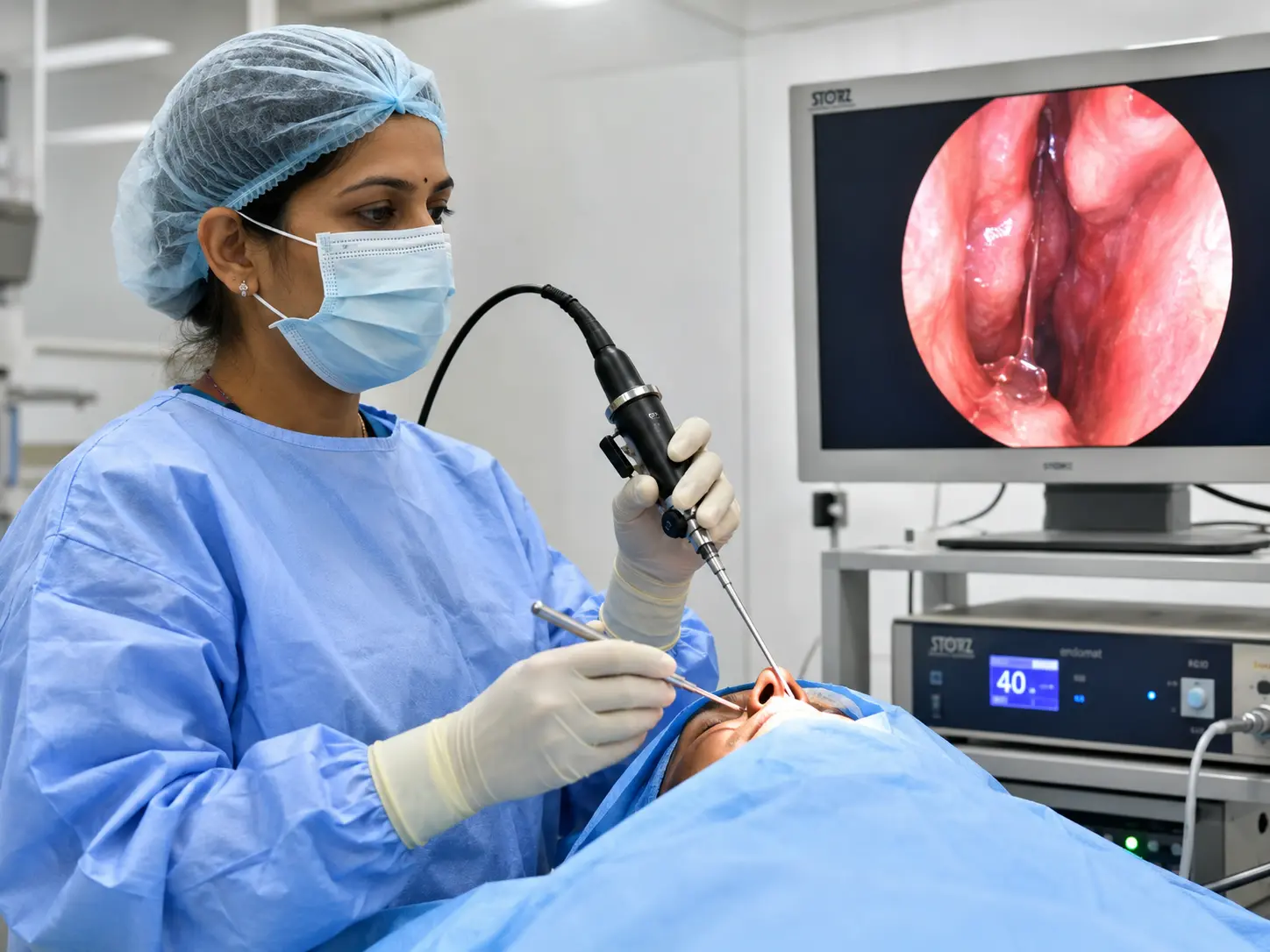
Endoscopic Sinus Surgery
Functional Endoscopic Sinus Surgery
Functional endoscopic sinus surgery, commonly called FESS, may be considered for selected patients with persistent sinus disease that has not improved sufficiently with appropriate medical treatment. Surgical planning depends on symptoms, endoscopic findings and imaging where clinically indicated.
Explore FESS
Nasal and Sinus Polyps
Nasal Polyp Treatment
Nasal polyps are soft tissue growths associated with inflammation inside the nose or sinuses. They may contribute to blockage, reduced smell, post-nasal drainage or recurring sinus symptoms. Treatment is selected according to polyp size, symptom severity, recurrence and response to previous medical care.
Explore Nasal Polyp Treatment
Recurrent Nasal Bleeding
Nosebleed Treatment
Nosebleed treatment involves identifying where bleeding begins and whether dryness, irritation, medicines, trauma, inflammation, blood pressure or another condition may be contributing. Recurrent, unexplained or difficult-to-control bleeding should be evaluated rather than repeatedly managed without determining the cause.
Explore Nosebleed TreatmentENT Diagnosis
How the Cause Is Identified
Good nose and sinus care starts by separating symptoms from their underlying cause. Nasal blockage, facial pressure and reduced smell may come from different combinations of inflammation, allergy, structural narrowing or polyps.
Clinical history
The timing, duration, side affected, recurrence pattern, allergy history, medicines already tried and previous nasal procedures all help narrow the possibilities.
Internal nasal examination
Examination can assess the septum, turbinates, visible inflammation, crusting, discharge and possible polyps. Nasal endoscopy may provide a clearer view when symptoms are persistent, recurrent or difficult to explain.
Imaging when indicated
CT imaging is not automatically required for every sinus complaint. It may become useful when persistent disease, recurrent episodes, surgical planning or another complication needs more detailed anatomical information.
Treatment Pathways
Medical Care or a Procedure?
Treatment is selected according to the diagnosis rather than symptom severity alone. Inflammatory sinus disease may respond to saline care, intranasal medicines or allergy management, while a significant structural obstruction may need a different approach.
For chronic sinus disease that remains troublesome despite appropriate medical management, endoscopic surgery may be considered. Cleveland Clinic describes functional endoscopic sinus surgery (FESS) as a minimally invasive procedure used mainly for chronic sinusitis and nasal polyps.
- Medical treatment is often the first step for inflammatory conditions
- Septoplasty may be discussed when symptomatic septal deviation restricts airflow
- FESS may be considered for selected persistent sinus disease
- Polyp treatment depends on symptoms, recurrence and response to medicines
If surgery becomes relevant, the specific pathway may include septoplasty surgery or functional endoscopic sinus surgery.
Goals of Treatment
What Nose and Sinus Treatment Aims to Improve
01 Easier Nasal Breathing
When blockage is caused by treatable inflammation or structural narrowing, targeted care can help improve airflow through the nose.
02 Fewer Recurrent Symptoms
Identifying the driver of repeated congestion, pressure or infection can reduce reliance on repeated short-term treatment.
03 Better Sinus Drainage
Selected medical or endoscopic treatment may improve drainage when swollen tissue, polyps or narrowed sinus openings are contributing.
04 Improved Smell and Comfort
Reducing inflammation and obstruction may improve day-to-day nasal comfort and, in some patients, help restore a reduced sense of smell.
Consultation and Planning
How Nose and Sinus Care Is Planned
The exact pathway depends on whether symptoms are inflammatory, structural, recurrent or mixed.
-
01
Review the Symptom Pattern
Discuss duration, recurrence, nasal airflow, discharge, facial pressure, smell changes, bleeding, allergies and treatment already tried.
-
02
Examine the Nose and Airway
The septum, turbinates, nasal lining and visible sinus drainage pathways are assessed; endoscopy may be added when useful.
-
03
Confirm the Likely Cause
Findings are reviewed to determine whether allergy, inflammation, infection, septal deviation, polyps or another condition is contributing.
-
04
Start the Appropriate Treatment
Medical management is used where suitable, while procedural options are reserved for selected structural or persistent disease.
-
05
Review Response and Recovery
Follow-up checks symptom improvement, healing after procedures and whether the treatment plan needs adjustment.
Further Investigation
Tests That May Be Needed
Not every nose or sinus complaint needs imaging or laboratory testing. Investigations are selected only when they are likely to clarify the diagnosis or guide treatment.
- Nasal endoscopy: may help assess deeper nasal structures, inflammation, discharge, polyps or obstruction.
- CT scan of the sinuses: may be useful for persistent disease, recurrent symptoms or surgical planning.
- Allergy evaluation: may be considered when symptoms show a strong seasonal, environmental or recurrent allergic pattern.
- Preoperative tests: are selected according to age, health, anaesthesia requirements and the planned procedure.
The purpose of testing is to answer a specific clinical question, not to perform every investigation routinely.
Safe ENT Care
How Treatment Is Chosen Safely
Safe care depends on confirming the diagnosis, matching treatment to the cause and reviewing response over time.
Diagnosis Before Treatment
Similar nasal symptoms can come from different conditions, so treatment begins with an appropriate assessment rather than a standard prescription.
Stepwise Management
Medical treatment is used first where appropriate, with procedures considered when symptoms, examination and response justify them.
Procedure Planning
If surgery is needed, the planned procedure, anaesthesia, expected recovery, benefits, alternatives and possible complications should be discussed beforehand.
Follow-Up
Review after treatment helps confirm symptom improvement, monitor healing and identify whether ongoing medical care is still required.
Nose and Sinus ENT FAQs
Frequently Asked Questions About Nose and Sinus ENT
General information about symptoms, evaluation, treatment and recovery.
Ask a QuestionWhen should I see an ENT for a blocked nose?
If congestion lasts more than a couple of weeks, keeps returning, or is affecting sleep and daily comfort, an evaluation is worthwhile rather than repeated self-treatment.
Is nasal endoscopy painful?
It is generally quick and well tolerated, using a thin scope to view the inside of the nose more clearly than an external examination allows.
Do all sinus problems need surgery?
No. Many cases are managed with medical treatment first. Surgery is considered mainly when structural or persistent issues do not respond to other treatment.
Can allergies cause ongoing sinus symptoms?
Yes. Allergic triggers are a common cause of recurring congestion, drainage and pressure, and identifying them is an important part of evaluation.
What counts as chronic sinusitis?
Symptoms such as congestion, facial pressure or reduced smell lasting twelve weeks or more are generally considered chronic and usually need a closer evaluation.
Can a deviated septum cause sinus symptoms?
A significantly deviated septum can contribute to blockage and may affect sinus drainage, which is why structural evaluation is part of a full assessment.
Take the Next Step
Get a Clearer Answer for Persistent Nose and Sinus Symptoms
Discuss ongoing blockage, recurrent sinus symptoms, septal concerns, nasal polyps or nosebleeds and understand which evaluation or treatment pathway may be appropriate.